Computing power becomes a strategic constraint
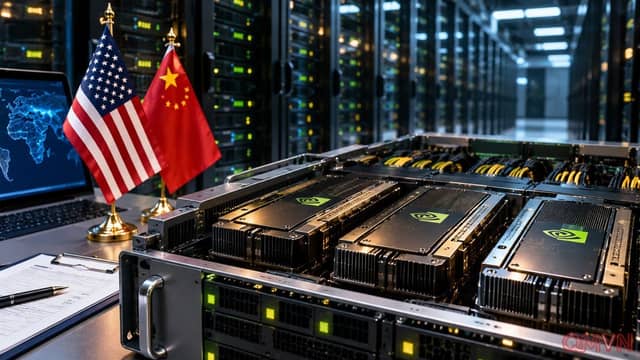
The new US regulation addresses access to advanced semiconductors even when the chips themselves do not cross into China. Published in the Federal Register on November 19, the interim final rule establishes licensing obligations for specified remote computing arrangements. It also creates additional requirements for exports to selected markets. For covered existing service arrangements, the regulation provides a 90-day period to obtain authorization. This is a licensing regime, not an automatic prohibition on every cloud service used by a Chinese company.
For AI laboratories, renting processors abroad has offered flexibility: they can acquire computing capacity for a large training project without permanently investing in equivalent hardware. When that access becomes uncertain, a project may need to be rescheduled, redesigned or moved to a different infrastructure provider. The effects extend beyond the initial training run, because evaluation, debugging and repeated experiments also consume substantial resources.
Two companies face different development challenges
Reuters, citing people familiar with the matter, reported that Z.AI's planned GLM-5.5 release could slip into the first quarter of 2027 or later. Its reported design involves approximately three trillion parameters.