MAIN CONTENT
A revision that became an accusation
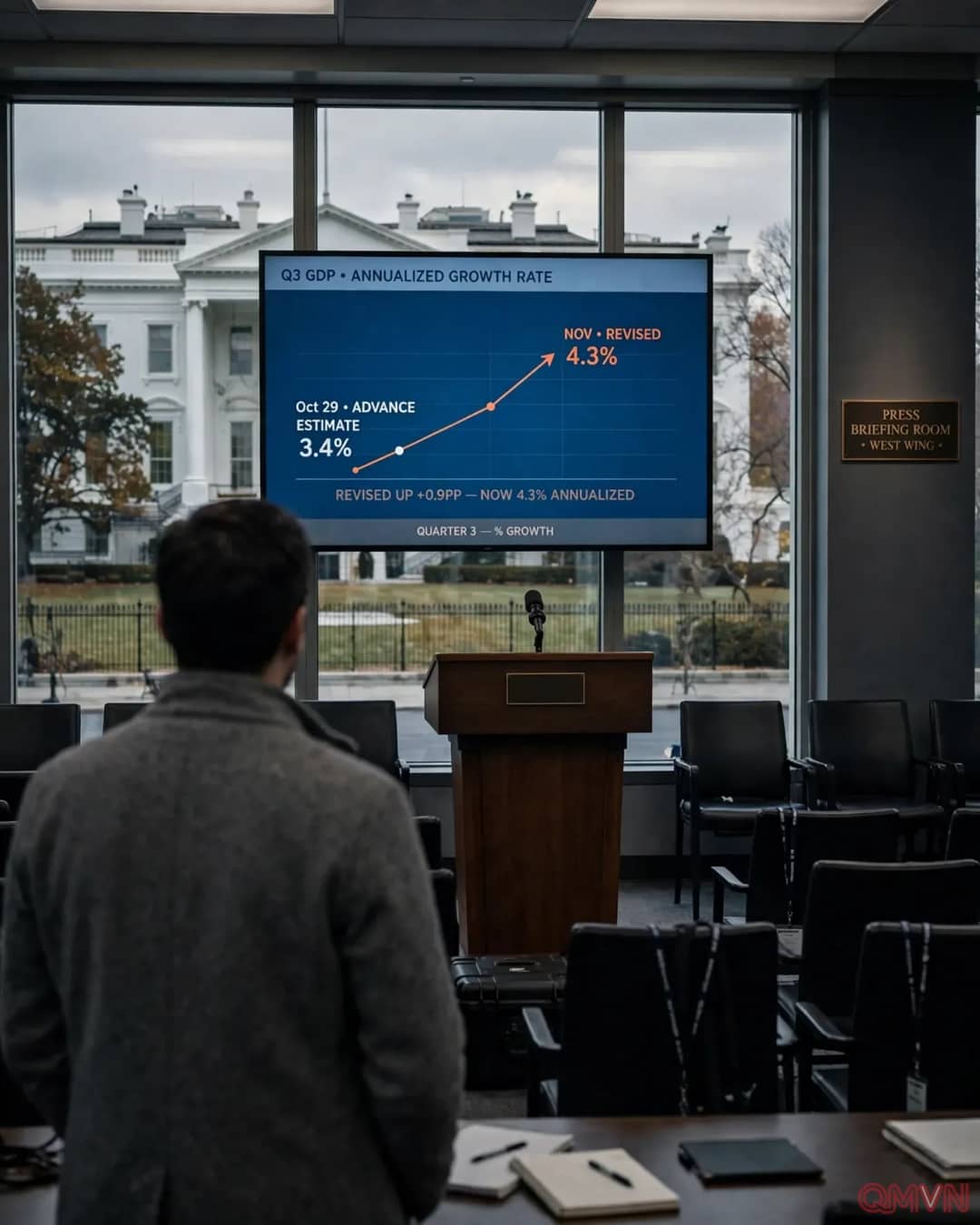
On Wednesday, the Bureau of Economic Analysis published its second estimate of gross domestic product for the July to September quarter. It showed the economy expanding at an annualized rate of 4.3%, nearly a full percentage point above the advance reading of 3.4% that had been released just days before voters went to the polls.
Within a day, the President turned the statistical update into a political charge. In a post on Truth Social, he wrote that the real numbers published before the election were fake and demanded to know why the correct figure had not been issued earlier, asking for an immediate investigation.
*“This is not a small error, this is a massive, and purposeful, error.” — Donald Trump*
Trump presented no evidence that the advance estimate had been manipulated. His argument rests on timing: had voters seen stronger growth figures before November 3, he suggests, Republicans might have fared better in an election that delivered heavy losses for his party across the country.
How growth estimates are built
Gross domestic product is not measured once and fixed forever. The BEA publishes an advance estimate roughly a month after each quarter ends, followed by second and third estimates as more complete information arrives, and then annual and comprehensive revisions that can reshape the picture years later.
The agency has explained publicly that advance figures can differ from later ones because they lack complete source data on inventories, international trade and consumer spending on services. Those gaps are filled with projections and trend-based assumptions, which are replaced as surveys, tax records and company reports come in.
Revisions of this size are not unusual. Statisticians regard them as evidence that the system is working, since each update brings the estimate closer to reality. Economists generally caution that a single revision, whether upward or downward, says more about incomplete data than about anyone's intent.
An unusual target for suspicion
The accusation carries an awkward twist. The Bureau of Economic Analysis sits within the Commerce Department, which is led by Trump's own appointees. Any deliberate understatement of growth before the election would therefore have occurred inside his administration, a point critics are likely to raise as the demand for a probe unfolds.
It is also rare for a political leader to complain that published growth was too low rather than too high. The upward revision is, on its face, good news for the administration, showing an economy that was stronger in the summer than first believed, even as inflation pressures continue to weigh on households.
Supporters of the President argue that the timing of data releases matters in a democracy and that voters deserve the most accurate information available. They say a gap of almost one percentage point between estimates deserves explanation, particularly when it arrives so close to a national election.
Trust in data under strain
The episode echoes a dispute from 2025, when Trump fired Erika McEntarfer, the commissioner of the Bureau of Labor Statistics, after a weak jobs report and large downward revisions. He accused her without evidence of manipulating figures for political purposes, a claim economists across the spectrum rejected.
That dismissal prompted warnings that statistical agencies could face a chilling effect, with officials fearing consequences for unwelcome numbers. Former agency heads from both parties defended the integrity of federal data, while Wall Street economists cautioned that eroding confidence could complicate monetary policy and financial stability.
Investors, businesses and the Federal Reserve all rely on official statistics to make decisions worth trillions of dollars. If growth, jobs and inflation numbers come to be seen as political instruments, the cost will be measured not only in lost credibility but in poorer choices across the entire economy.