MAIN ARTICLE
The mother behind the referral file
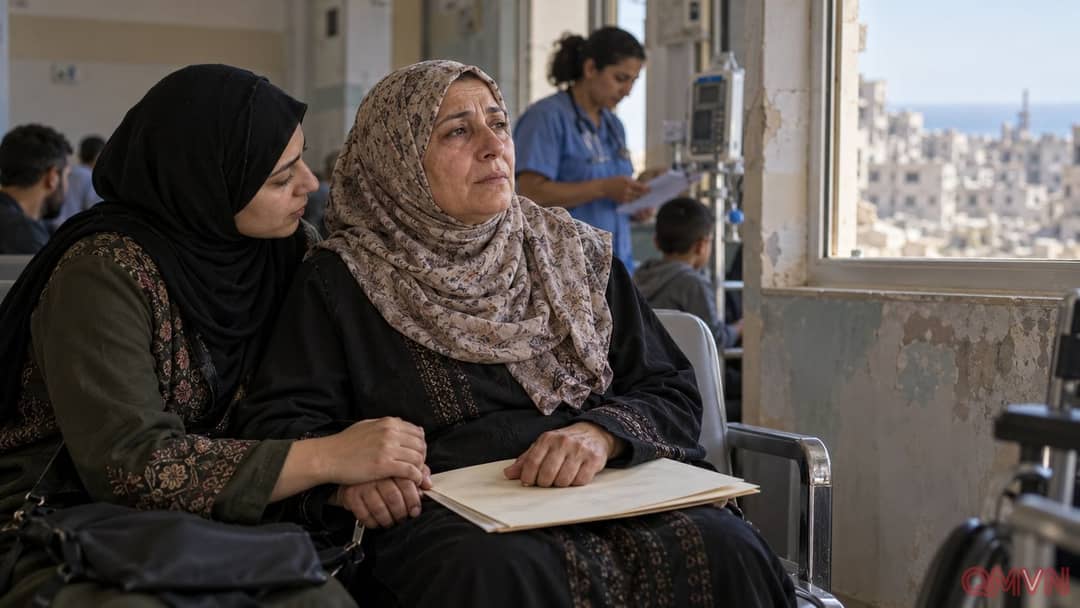
Summer remembers Iktimal through meals, desserts and long conversations at her home near the sea. Her aunt had a way of making people feel welcome. She was a mother and grandmother, woven into family life before becoming a patient collecting documents to leave Gaza. Those ordinary memories restore something an evacuation file cannot contain: a person’s place in other people’s lives, and the relationships that no replacement document or hospital bed can recreate.
According to the family’s account in The Independent, Iktimal began feeling unwell in February 2026 and underwent a biopsy. Her cervical cancer diagnosis arrived after more than a month, amid shortages affecting laboratory equipment and supplies. She had a hysterectomy in April, but recovery was difficult and painful. Without her full clinical records, it is impossible to establish her individual prognosis. What the relatives describe clearly is a search for further care that became increasingly uncertain as her condition worsened.
Paperwork and illness move at different speeds
The family says an evacuation application was submitted in May. It required medical reports, test results and diagnostic images, while hospitals were contending with broken equipment and unreliable record systems. Such documents ordinarily help receiving clinicians establish what a patient needs.