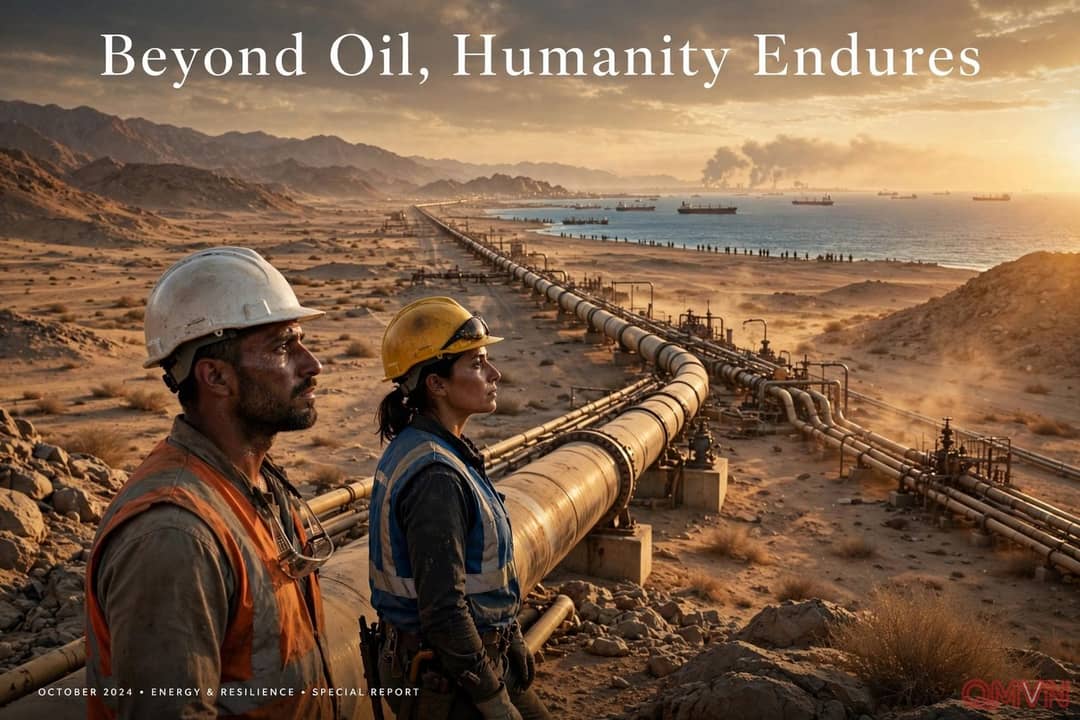
The Gate of Tears Tightens
The Bab el-Mandeb Strait, only about 30 kilometers wide at its narrowest, connects the Red Sea to the Indian Ocean and carries a significant share of world trade. In early September, Houthi forces in Yemen advanced rapidly along the western coast, taking the port city of Mocha and the strategic Perim Island that splits the strait into two shipping lanes.
Four Yemeni government sources told Reuters that control of Perim allows the Houthis to monitor almost all traffic. The group declared a naval blockade in July, stating that all vessels except those linked to Saudi Arabia could pass safely. According to BBC and Al Jazeera, this is the largest Houthi territorial expansion since the 2022 truce, giving Tehran an additional leverage card in the Red Sea.
For Yemeni civilians, who have endured years of war, the development means deeper humanitarian isolation, as food and fuel aid already struggles to reach coastal communities.
A Desert Artery Under Fire
In parallel, Saudi Arabia's alternative export route came under fire. The East-West pipeline linking Abqaiq near the Gulf to Yanbu on the Red Sea is designed to bypass the Strait of Hormuz. The line stretches 1,200 kilometers with a nameplate capacity of about 5 million barrels per day.