MAIN ARTICLE
From Wall Street to Asia, a concentrated sell-off
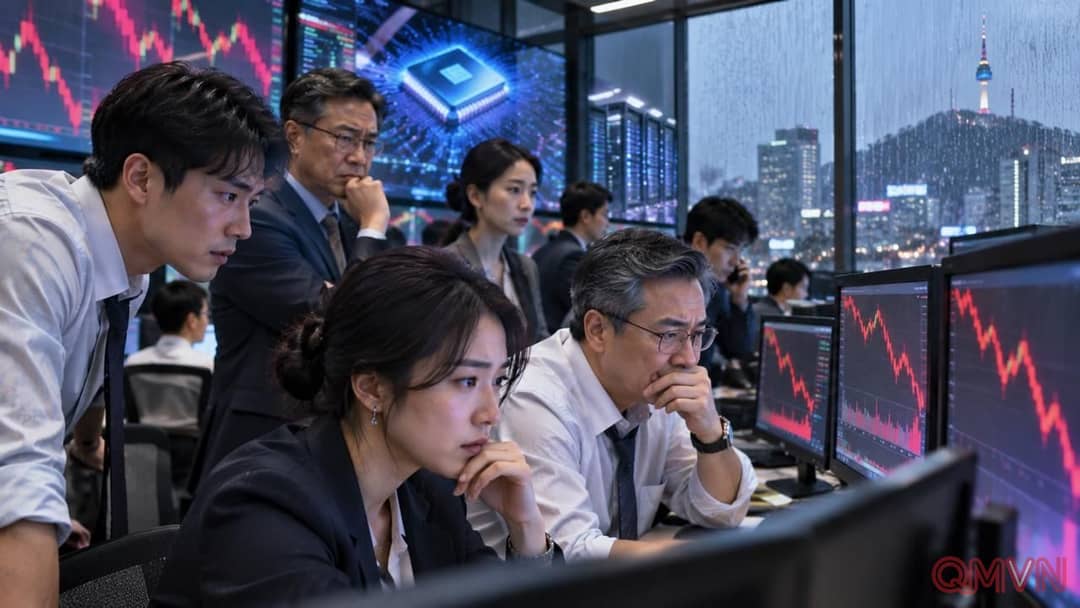
Seoul’s decline illustrates how closely the Korean market is tied to memory chips, servers and other equipment deployed in AI systems. Taiwan’s semiconductor-heavy index is similarly exposed to changes in global expectations for advanced computing. In Hong Kong and mainland China, technology valuations intersect with concerns about consumption, economic growth and trade restrictions. These are not identical markets: domestic policy, exchange rates and sector weights can shape individual outcomes. A single explanation for every percentage point of decline would therefore be misleading.
Japan’s exchanges were closed on Monday for a national holiday. On the preceding Friday, the US S&P 500 had fallen 3.7% and the Nasdaq Composite 5.3%, according to the reference report, extending a difficult week for technology stocks. Investors also watched US equity-index futures rebound before the regular session opened. A futures gain is not a confirmed market recovery, just as an intraday fall is not automatically the day’s final result. Those distinctions matter particularly when prices move quickly and headlines circulate faster than confirmed closing data.