MAIN STORY
When an apparently inert material changes
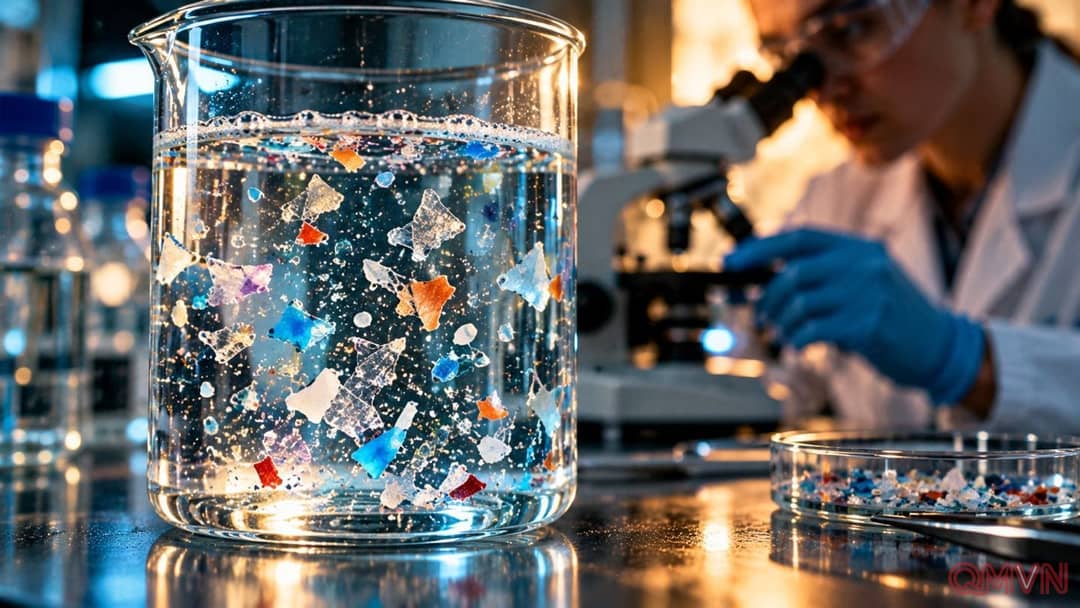
Plastic is widely used in food packaging, water bottles and household goods because the long polymer chains in many products remain relatively stable in ordinary conditions. Yet a whole object and the microscopic fragments it eventually sheds do not necessarily behave the same way. Microplastics, conventionally defined as particles smaller than five millimeters, offer much more surface area for their mass.
Naixin Qian and colleagues demonstrated that chemical activity at the plastic–water boundary can generate reactive oxygen species. The reaction varies with the water-repelling characteristics and electrical properties of different surfaces. Their results offer a potential chemical explanation for oxidative stress observed in earlier experimental studies of plastic particles.
Why water plays an active role
In one experiment researchers combined polystyrene fragments with water containing methyl orange, a dye that breaks down in the presence of oxidizing agents. Over ten days the color faded markedly.