When the desert exported wine
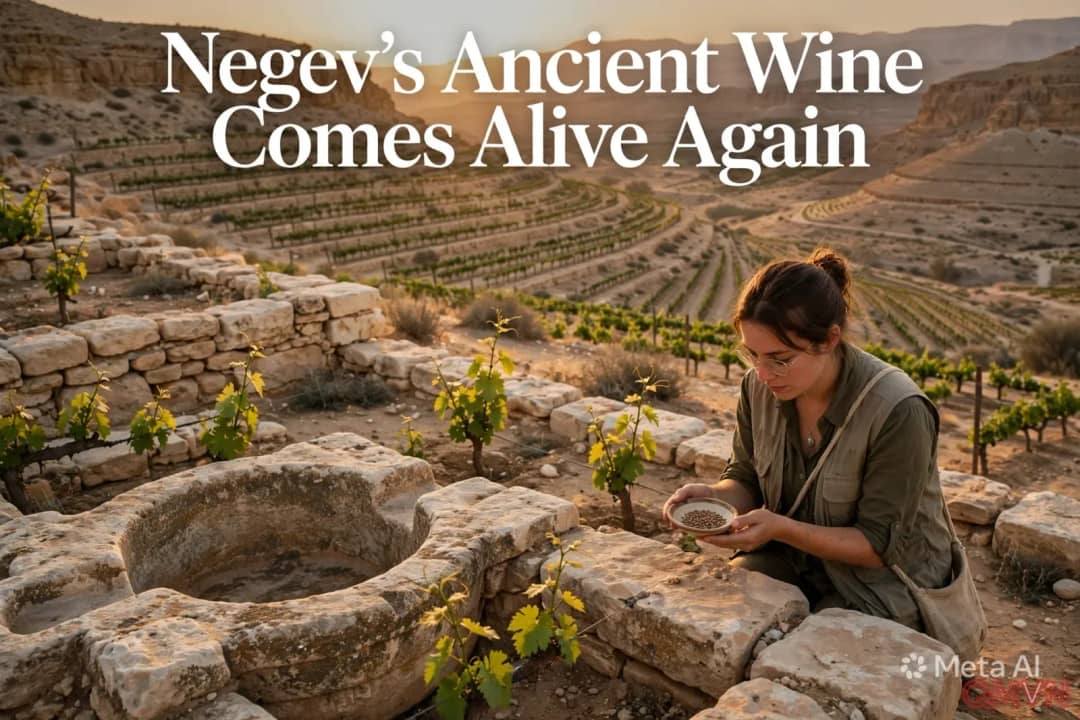
Between the 4th and 7th centuries, viticulture was the economic backbone of the Negev's towns — Avdat, Shivta, Nitzana and Haluza. Winepresses, stone terraces and floodwater-harvesting systems still mark the wadis of the Negev Highlands, evidence of an extraordinary effort to bring Mediterranean agriculture into one of the region's harshest environments.
The wine traveled in clay jars on camelback to Gaza and Ashkelon, and from there to Constantinople, Rome, Marseille and even northwestern Europe. Hundreds of thousands of jar fragments found around the Mediterranean show that this was no local trade but an export industry, and historical sources praised the flavor of “Gaza wine.” In today's terms, argue the University of Haifa archaeologists Guy Bar-Oz, Joshua Schmidt and Gideon Avni, the Byzantine Negev was an appellation long before the word existed.
Then the story broke off. In the late Byzantine and early Islamic periods, during the 7th and 8th centuries, vineyards were abandoned and settlements emptied. Researchers have linked the decline to a combination of factors, including the plague of the mid-6th century and a cooler climate that disrupted Mediterranean markets. For more than a thousand years, the terraces and presses stood silent.