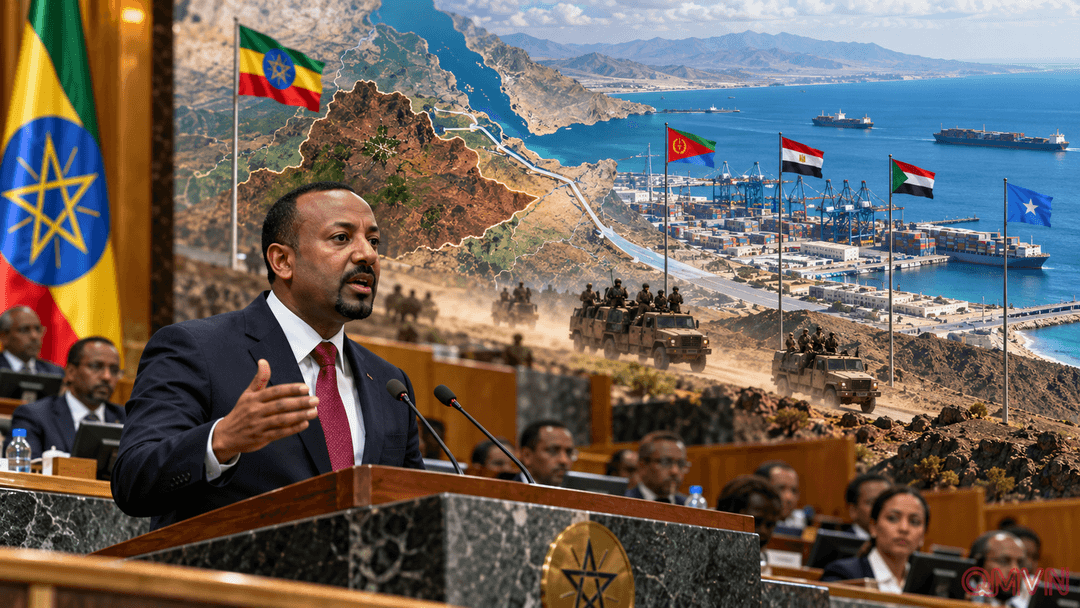
An economic need increasingly framed as geopolitics
Ethiopia lost its direct coastline in 1993 when Eritrea became independent. Since then, its economy has relied heavily on transport corridors through neighbouring countries, especially the route to Djibouti. For a large and industrialising market, high logistics costs weaken competitiveness, while dependence on a dominant corridor leaves Addis Ababa exposed to regional disruption.
Abiy has therefore repeatedly described maritime access as a long-term development necessity rather than a temporary political demand. In his first major address of the new term, he again said Ethiopia would work diligently to secure an outlet to the sea, without identifying a single route. The central question is whether Addis Ababa can turn that objective into a commercially negotiated arrangement accepted by coastal states, or whether neighbours will continue to interpret it as a strategic claim.
Eritrea, Somalia and the limits of access
Eritrea views Ethiopia’s language with the greatest suspicion. Relations that improved after Abiy came to power in 2018 have deteriorated sharply.