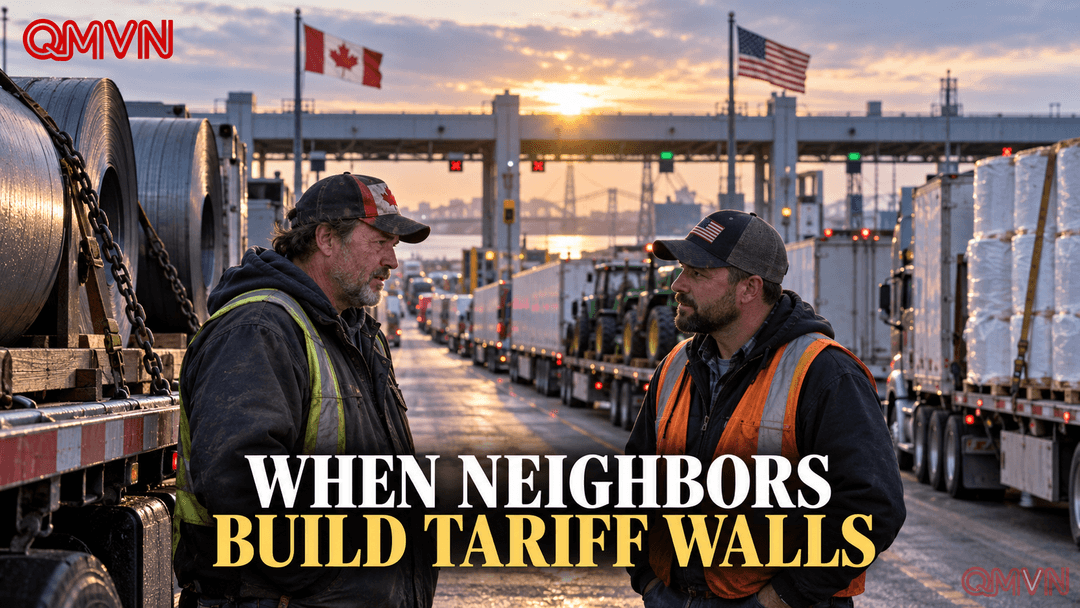
The new round begins on September 8
Canada’s schedule applies duties of 15% to 50% to US imports worth about C$27.6 billion. Goods already in transit before the measures take effect are excluded, limiting immediate disruption. Ottawa selected economically and politically visible sectors including steel, dairy, household appliances, electronics, farm machinery, pulp and paper. The action answers Washington’s 50% tariffs on about US$20 billion of Canadian products, introduced in late August after negotiations collapsed. What had been a cycle of threats is now a direct cost on purchase orders. The breadth of the list also signals that Canada wants pressure to be felt across several American industries rather than concentrated in one trade corridor.
Supply chains do not stop at the border
Canada and the United States trade more than finished products. In manufacturing, the same item may cross the border several times as steel, components and machinery are processed and assembled. A tariff can therefore strike one value chain repeatedly. Bombardier illustrates the interdependence: the Canadian aircraft maker sells heavily in the United States while relying on American engines, suppliers, employees and facilities. Political rhetoric often describes commerce as a contest with one winner and one loser. Production maps tell a different story. Jobs and investment on both sides can depend on the same aircraft, vehicle, farm machine or construction project. Damaging the neighbor’s company may also reduce orders for businesses at home.