MAIN STORY
The protective shell that can make or break a mission
A payload fairing encloses a satellite at the rocket’s tip during the earliest stages of flight through the dense atmosphere. It must withstand aerodynamic pressure, vibration, noise and temperature changes while protecting the spacecraft inside. Once the vehicle reaches a sufficient altitude, the fairing splits away. The European Space Agency describes this structure as a shield against aerodynamic, thermal and acoustic effects, not merely a streamlined cover.
Modern fairings generally rely on lightweight metals or advanced composites, sometimes combining honeycomb panels with acoustic treatments. Those approaches offer proven strength, stiffness and precision, but manufacturing, inspection and qualification take time. With satellite constellations increasing demand and rideshare missions packing several spacecraft aboard one launcher, the delivery schedule of a fairing can affect the entire launch manifest. Cutting the cost of a component discarded so early is therefore commercially attractive.
Why plywood has entered the launch race
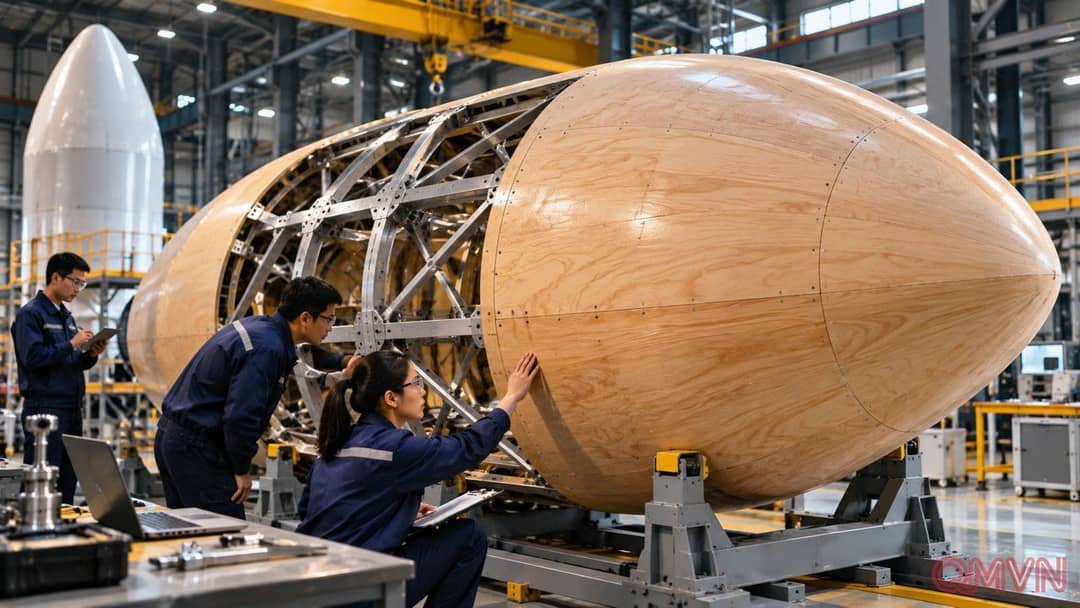
Light Year Explorer’s proposed 4.2-metre structure is designed for mainstream commercial rockets carrying either multiple satellites or a single large payload. According to its description, formed low-density plywood supplies a smooth aerodynamic outer surface, while a metallic skeleton carries the principal loads.