MAIN CONTENT
A small strand of fur, a lasting promise
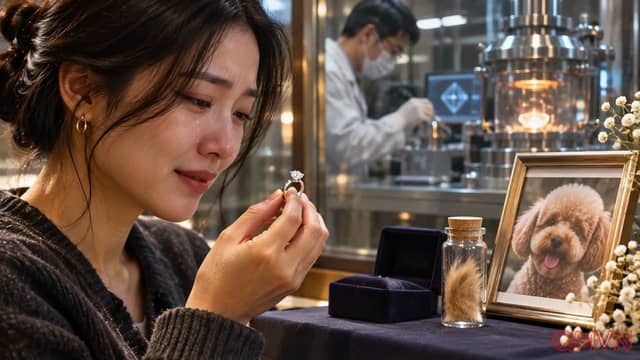
In 2020, as her toy poodle Baobao grew old, Chen Xing in Jilin province commissioned a ring using the dog’s fur. According to Jimu News, the 8,950-yuan piece arrived in February 2021. It contained an 18-karat gold setting and a half-carat, princess-cut laboratory-grown diamond. After Baobao died, the ring became something Chen could wear close to her every day.
For a grieving owner, the object is more than precious metal and carbon. It offers a ritual of farewell, giving absence a tangible shape. Yet this personal story raises a commercial question: is the customer purchasing a gemstone, a documented scientific process, or a guarantee that the animal’s remains actually became part of the stone? Those promises are not interchangeable.
What technology can establish—and what it cannot
Businesses describe collecting fur or ashes, cleaning and processing them to recover carbon, then producing a crystal under high pressure and temperature, often called HPHT. Laboratory-grown diamonds have the crystal structure of diamond; they are not simply glass imitations. Depending on the production method, additional carbon and processing materials may also be involved.