Why critical minerals have become strategic
Critical minerals include materials essential to technologies, energy systems and defense. Rare earths are a group of 17 elements, but the broader category also includes lithium, cobalt, nickel, graphite and other resources. Their importance varies by application, and they should not be treated as interchangeable. Rare earth magnets are particularly valuable in electric motors, industrial equipment and certain military systems. A small quantity of material can determine whether a much more expensive product can be completed.
China’s advantage reflects decades of investment, industrial coordination, technical expertise and economies of scale. CSIS estimates that it accounts for roughly 69% of rare earth mining, 92% of processing and 93% of magnet manufacturing. These figures describe different stages and should not be applied to every critical mineral. Building a mine outside China does not automatically create an independent supply chain if its output still requires Chinese refining.
Export controls and the limits of economic leverage
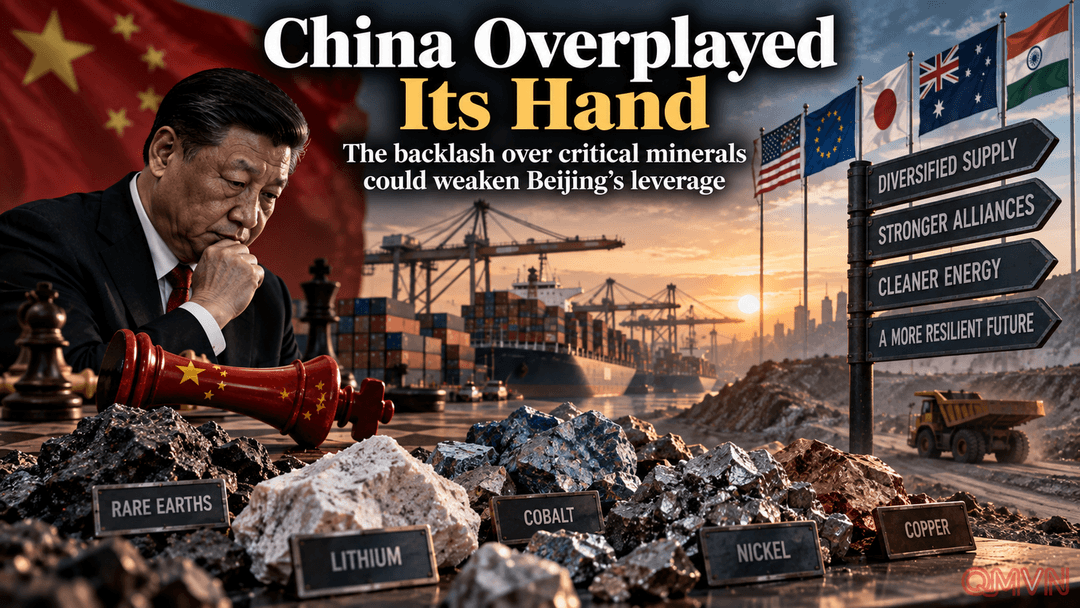
The WSJ editorial contends that China’s use of mineral restrictions has encouraged competitors to organize against its dominance. That is a plausible strategic argument, not an established verdict. A CSIS survey released earlier in 2026 found that more than two-thirds of experts believed China had used its rare earth leverage effectively, while 23% considered it overplayed.