MAIN BODY
From two steep declines to a rapid rebound
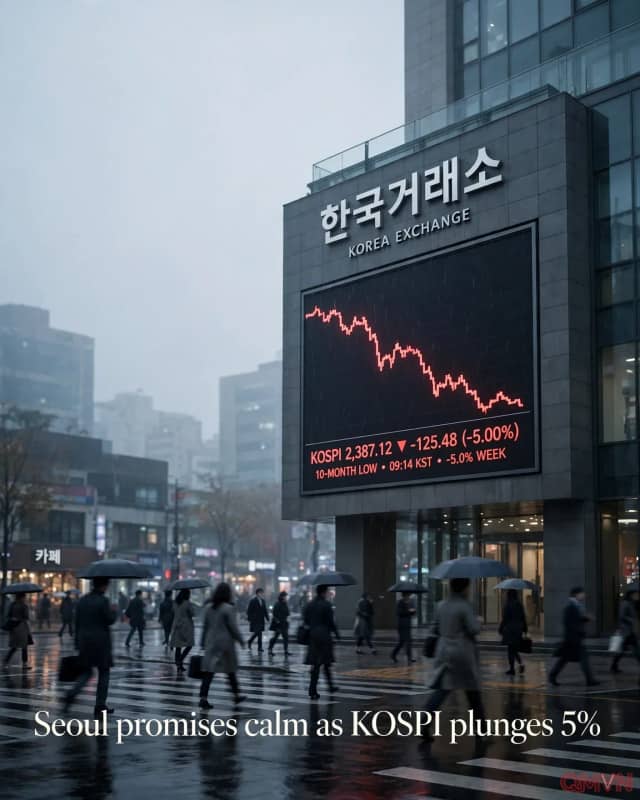
The Kospi had fallen 5.21% in the preceding Friday session and another 3.31% on Monday, ending at 4,708.54. On Tuesday it opened 171.62 points higher and had gained 263.75 points by 9:08 a.m., according to The Korea Herald. Yonhap subsequently reported that it crossed 5,000. The recovery was substantial, but a percentage gain following a decline is calculated from a smaller base and does not necessarily erase earlier losses.
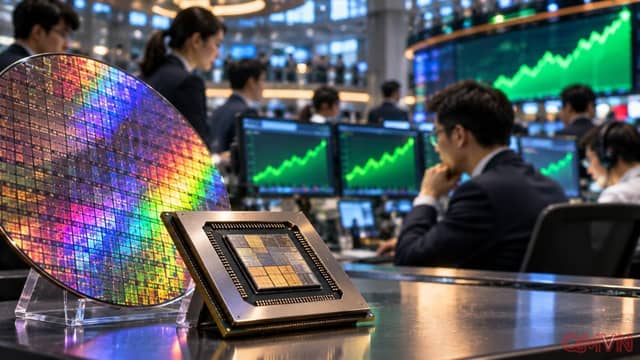
Samsung Electronics and SK Hynix are important participants in the memory-chip business. Their products help computing systems move information between processors and storage, and high-bandwidth memory is particularly important for advanced AI accelerators. Expectations of stronger demand therefore affect not only their potential revenues but also the valuation of the broader Korean market, where large semiconductor companies carry substantial weight.
Why the exchange slowed automated orders
The Korea Exchange’s sidecar mechanism is intended to moderate the impact of sudden futures price movements on programme trading. Under the exchange’s published rules for the relevant market, a movement of around 5% in the reference futures price that persists for one minute can trigger a five-minute restriction on the relevant programme orders.
In an upward move, the restriction applies to programme buying. Ordinary market trading is not necessarily halted.
This distinction matters because financial headlines can give the impression that a sharp rally has shut down the exchange. The intervention is better understood as a short pause for one category of orders, allowing the market to absorb a wave of demand. It does not establish whether the price reached during the rally represents a fair valuation.
Wall Street sends a signal across Asian markets
Reuters reported that Nvidia closed 31.5% higher on Monday after Huang’s reinstatement. The company’s leadership change was followed by a wider recovery in technology stocks. Japanese shares also advanced, reflecting the international reach of semiconductor production and the investment cycle in AI infrastructure.
The impact on Korea is particularly visible because of its major memory-chip producers. However, a recovery in Nvidia’s valuation cannot automatically translate into higher Korean corporate earnings. Customer orders, production yields and factory investment schedules determine when optimism becomes revenue. Stock prices can move much faster than industrial activity.
What the rally can and cannot tell us
Associated Press reported a broad recovery on Wall Street following Huang’s reinstatement. The simultaneous rebound across Asia suggests that investors were reassessing a shared set of risks rather than reacting to isolated domestic developments. However, a relief rally after heavy losses does not necessarily mean the previous peaks have been recovered.
Three indicators are worth following over the coming quarters:
Confirmed orders for memory, manufacturing equipment and AI infrastructure.
Profit margins and cash flows relative to ambitious investment budgets.
The effectiveness of corporate oversight and compliance with export regulations.
The return of an experienced founder can restore continuity to business relationships. It cannot by itself guarantee that customers will earn sufficient returns on their investments or that future policy changes will leave supply chains untouched.