MAIN STORY
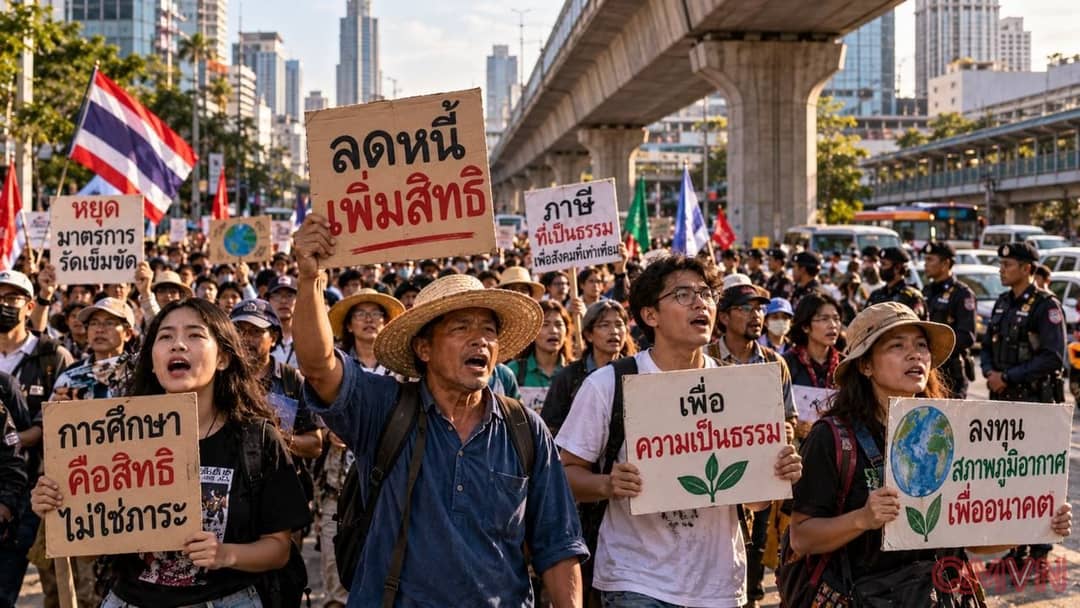
From coconut farms to the streets of Bangkok
The march took place on October 16 during the IMF–World Bank Annual Meetings, held in Bangkok from October 12 to 18. Outside the formal venue, demonstrators brought perspectives shaped by farming, precarious work and climate damage. Their demand was not that public debt could be ignored. It was that the costs of adjustment should not automatically fall upon those least equipped to absorb them.
Sombat Chuekrod, a 51-year-old coconut farmer, feared austerity would make already struggling families poorer. Organiser Supaporn Malailoy argued that affected communities should be participants in decisions about their countries’ development, not merely spectators to negotiations. Those voices translated a global argument about public borrowing into questions about daily security and dignity.
The fiscal arithmetic and its human consequences
The IMF says governments have spent heavily responding to the pandemic, wars and price shocks. Its October outlook projected roughly 3.1% global growth in 2026, while warning that the gains are uneven and threatened by oil prices, interest costs and debt.