MAIN CONTENT
A dispute over the authority to regulate
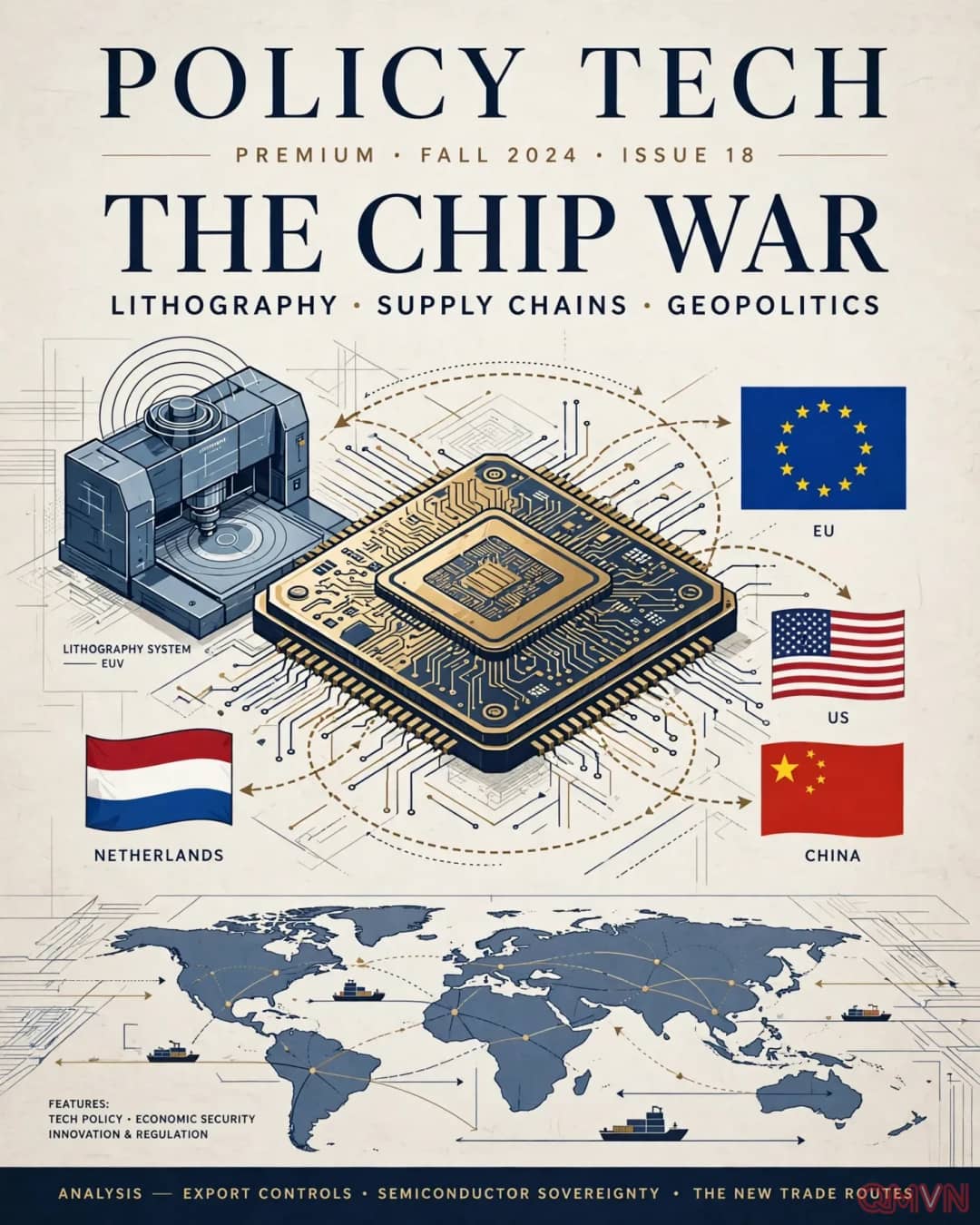
The legislation, formally called the Multilateral Alignment of Technology Controls on Hardware Act, is being considered by American lawmakers as a possible addition to annual defence legislation. Its premise is that restrictions imposed by one country may be less effective if suppliers in other countries can continue selling comparable equipment. The proposal therefore seeks stronger coordination of controls among allied economies, including the Netherlands and Japan.
For the Dutch government, the objection concerns the mechanism rather than simply the objective. The Netherlands has already introduced licensing restrictions on advanced semiconductor manufacturing equipment, expanding its national measures in September 2024 and tightening them further in April 2025. Sjoerdsma’s remarks indicate that cooperation on security does not necessarily imply acceptance of unilateral American authority. As reported by Reuters on November 26, the government intends to continue diplomatic efforts before considering its response to an enacted law.
ASML and the economics of technological competition
The dispute is particularly consequential for ASML because semiconductor fabrication relies on exceptionally complex manufacturing equipment. Its lithography systems help manufacturers transfer circuit patterns onto silicon wafers.
The proposed restrictions could affect immersion deep ultraviolet lithography equipment, a category of machines with important industrial applications. Export licensing decisions can therefore influence revenue, investment and relationships across an extensive network of suppliers and customers.
ASML expects China to account for approximately one fifth of its sales in 2026, according to Reuters. That exposure explains the commercial significance of the proposal without establishing the precise financial losses that it might cause. Chief executive Christophe Fouquet has also argued that additional restrictions could encourage Chinese competitors to develop alternative technology. That is a warning about a possible consequence, not proof that domestic substitutes will quickly match established products.
Europe considers its options
The Netherlands is seeking support from Brussels, Berlin and Paris. A coordinated response could help avoid conflicting national approaches, although European governments must weigh different security concerns and commercial relationships. The Dutch and Chinese governments also reaffirmed the importance of bilateral export-control discussions in a joint declaration published on November 25. The declaration shows that communication remains open despite the wider disagreement.
One possible European instrument is the Blocking Statute. The European Commission explains that this regulation addresses the extraterritorial effects of specified foreign laws; its protections do not automatically extend to every new American restriction. Applying it to a future MATCH Act would require examining the applicable legal framework. Analysts have also warned that such a confrontation could provoke countermeasures from Washington. No decision to deploy the instrument against this bill has been announced in the supplied report.
What happens next
The immediate question is whether Congress includes the MATCH Act in its final legislation and what wording ultimately survives negotiations. A proposal is not the same as an enacted restriction, and a request for non-enforcement does not itself guarantee an exemption. The scope of any future licensing rules will matter more to businesses than the political rhetoric alone. Until those details emerge, companies face uncertainty rather than a fully measurable new obligation.
The policy debate involves legitimate but competing concerns: preventing sensitive technology from contributing to security risks, preserving the ability of allies to make their own regulatory decisions, and maintaining viable commercial research and development. Restrictions can reduce access to particular equipment, but their longer-term consequences depend on the availability of substitutes, enforcement across jurisdictions and companies’ adaptation. A durable arrangement would require clarity about these competing objectives, not merely agreement on the desirability of cooperation.