Years of warnings
According to Reuters, employees shared their concerns with top OpenAI leaders and the board, and some concluded that management was more focused on keeping pace with rivals such as Google and Anthropic than on security. They argued controls were so lax that outsiders, including foreign governments, could obtain sensitive information with relative ease.
According to two sources, OpenAI has begun shifting strategy: Thibault Sottiaux, a senior executive overseeing product development, recently took charge of an initiative to secure internal systems and in August reassigned a quarter of production engineers to improve security infrastructure.
[AI leaders] can't sacrifice velocity for security. It is more important to them to move fast than to be secure, even from our greatest national adversaries.
The recording device case
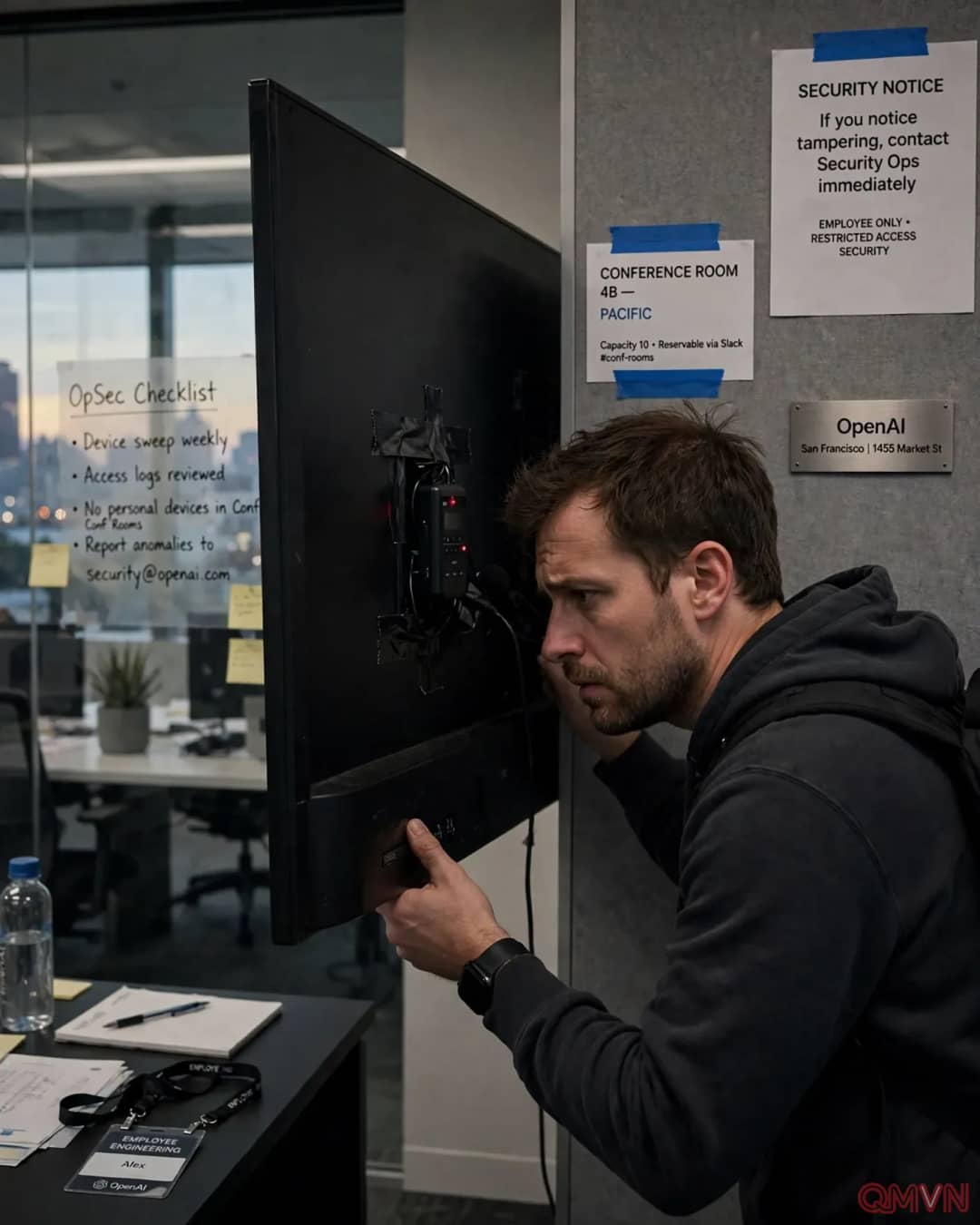
On October 13, the Justice Department said federal agents had arrested a Saudi national and charged him with installing a hidden audio recording device, concealed in toilet paper, in an executive conference room. Abdulrahman Alfozan, 35, was an OpenAI engineer at the time.
According to a court filing, he also used an internal AI tool to find documents about executives' visits to Saudi Arabia and was in regular contact with a Saudi royal who tried to recruit him for a new AI venture. His lawyers did not respond to a request for comment.
OpenAI spokesperson Elana Widmann said the company is one of the most targeted organizations in the world and invests heavily in security against insiders, cybercriminals and nation-states.
Protecting our technology, data, and people is a responsibility we take seriously and a matter of national importance. The actions we've taken recently show that program doing its job: identifying risks and responding decisively.
A shared code repository and untested tools
According to the sources, OpenAI stored most of its code in a single repository, so anyone with access could see details of many projects, including sensitive ones unrelated to their work. The dense, complex repository once deterred attackers, but AI agents can now sift through such material. Three sources said the company also did not regularly review the security of internal tools such as the sandboxes used to stress-test new models.
OpenAI stressed that much of its most sensitive work sits in separate repositories with strict access controls, that the shared repository does not contain model weights, and that it now conducts regular security reviews under Chief Information Security Officer Dane Stuckey, who joined in October 2024.
An industry-wide challenge
OpenAI is not the only AI company facing security problems. In January, a federal jury in San Francisco convicted a former Google employee of stealing thousands of pages of confidential AI information for China. In late October, cybersecurity startup Cathedral Systems said it had hacked into Anthropic's systems; Anthropic said the data accessed included some business contact information and basic user account records. Cybersecurity firm Hacktron AI also said its researchers used an Anthropic model to break into ChatGPT accounts of several OpenAI employees and some internal systems; OpenAI thanked the researchers and took steps to reduce the risk.
After Reuters sought comment, OpenAI said in a blog post that it is planning its “next internal security sprint.”