MAIN ARTICLE
An eastward shift without closing Western doors
When Ahmad Zuhairi Abdullah joined Universiti Sains Malaysia more than two decades ago, Western institutions were dominant reference points across chemical engineering research. Today, he told the South China Morning Post, Chinese publications, researchers and visiting students have become much more visible. The change is less a replacement of one research sphere with another than a broadening of opportunities: Malaysia is seeking complementary skills, facilities and training links across several regions.
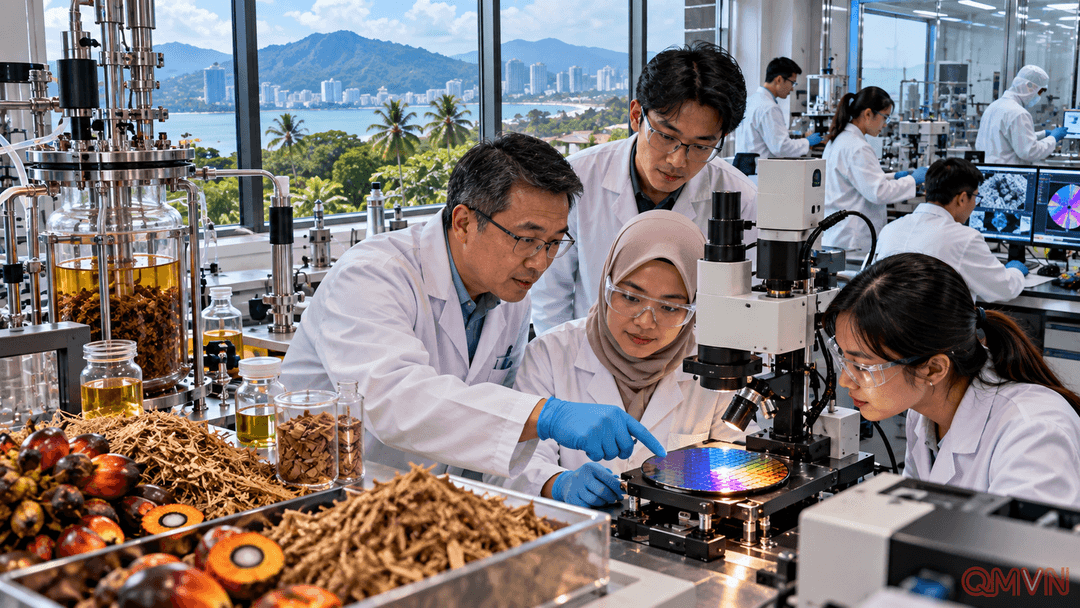
The Joint Laboratory of Biomass Chemical Engineering between USM and Huaqiao University offers a tangible example. USM confirms that the partnership was formally inaugurated during a visit on 21 January 2026, building on exchanges that began in 2025. Research, technology transfer, researcher mobility and talent development are all part of its intended institutional foundation rather than isolated academic visits.
Finding value in overlooked agricultural residues
Malaysia’s large palm-oil industry produces substantial amounts of pressed fibre, shells and other biomass. Some of that material contains lignin, the complex structural substance in plants that can be difficult to turn into marketable chemicals.