MAIN CONTENT
A company seeks to regain the initiative
Megaspeed’s November 15 response rejected media assertions about its operations, supply chain and global business that it said lacked verifiable evidence. It characterized itself as a legitimate company operating within applicable local law and export restrictions. It also announced the appointment of outside legal counsel to conduct an internal review, a step aimed at reassuring customers and partners while investigations continue.
The company said Alice Huang officially departed on August 30, 2025, holds no current position and would not be discussed in connection with private matters. That is the company’s account of her employment status, not an independent finding concerning every prior transaction or informal relationship. The distinction matters when a corporate statement is being weighed against evidence that regulators may still be gathering.
What Singapore has actually established
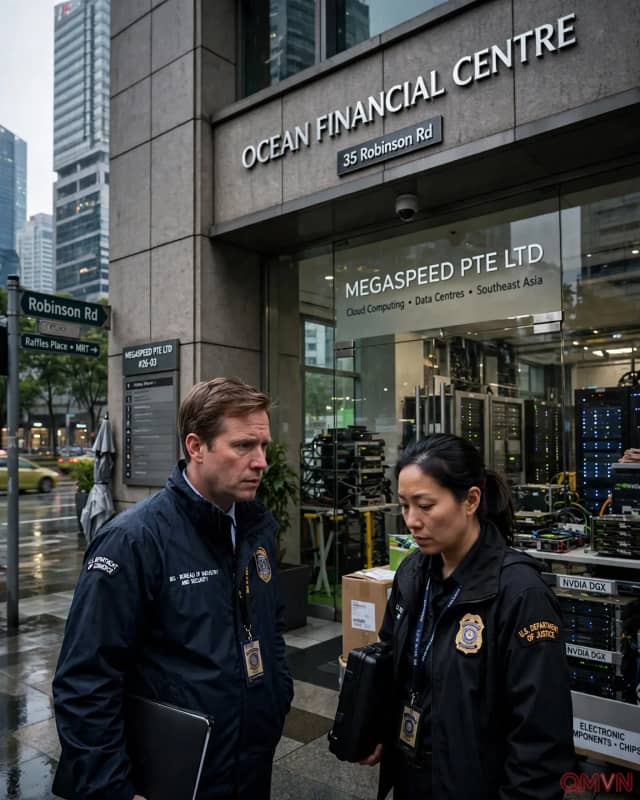
Singapore’s Ministry of Home Affairs said on November 12 that police and customs officers opened an independent investigation in February 2025 into possible inaccurate declarations concerning server purchases. Officials identified Alice Huang as a former chief executive, chairperson and key controller.
Singapore said the inquiry began independently of any foreign request; a US export-control post-shipment verification visit took place later, in June 2025.
By February 2026, investigators considered the evidence insufficient to establish that Huang committed an offence relating to the declarations under examination. Police nonetheless concluded that she knowingly gave them inaccurate information to minimize her role, issued a stern warning and barred her from returning to Singapore. Crucially, officials said the Singapore inquiry was not about espionage. Investigations concerning Megaspeed and six other individuals remain under way, with no final judgment established by that announcement.
Cloud computing complicates chip controls
The business model at issue is more complex than a simple shipment from one country to another. AI accelerators may be purchased by a company in one jurisdiction, installed at a data center in another and then rented remotely to customers elsewhere. Enforcement agencies must distinguish physical diversion from remote access to computing power, since different rules can apply to each. Investigators have questioned whether declared destinations for particular servers matched their actual movement.
Malaysia has separately examined possible redirection of advanced processors involving a Megaspeed-linked company, according to international reporting. Allegations directed at an intermediary do not on their own establish knowing wrongdoing by the chip manufacturer. Nvidia has said it cut off Megaspeed’s supply in 2025. Determining the ultimate end users requires reliable records, cooperation across borders and scrutiny of contracts rather than inference based solely on fast-growing sales.
A broader crisis of corporate accountability
The allegations intensified following disclosures concerning former Nvidia chief Jensen Huang’s personal relationship with Alice Huang and his November departure. Reports citing American intelligence suspicions described Huang as a possible Chinese intelligence asset. US officials have not publicly determined that she was a spy, while Beijing has rejected the accusations. Personal conduct, corporate compliance and criminal liability are separate questions, and careful reporting must keep them separate.
For the AI sector, the enduring issue is whether powerful hardware can be traced through resellers, hosting facilities and remote customer accounts. Good oversight requires auditable shipping records, meaningful checks on intermediary companies and clear channels for companies and individuals to respond. Southeast Asia’s growing data-center economy has much to gain from innovation, but its credibility depends on controls capable of independent scrutiny rather than on assurances alone.