MAIN CONTENT
What machines cannot copy
Imagine that 45 years ago, after the success of Evita, Andrew Lloyd Webber had asked a machine what to write next. It would almost certainly not have suggested setting T.S. Eliot’s poems about cats to music and dressing actors as felines. Yet that seemingly eccentric idea became Cats, one of the biggest box-office hits of all time. Speaking to reporters in Seoul, he argued that AI can only lean on the past.
*“It would have come up with something that had been based on musicals of the past.” — Andrew Lloyd Webber*
What humans bring, in his view, are their own thoughts and their originality. At a time when the global creative industries are anxious about the rise of AI, the assertion from a man whose melodies have echoed for half a century carries special weight.
Mona Lisa: when disappearance creates a legend
Nor would AI have suggested the subject of his upcoming show: the theft of the Mona Lisa from the Louvre in 1911 by Italian glazier Vincenzo Peruggia. The idea came from an article in The Times of London explaining that the painting drew little attention until it was stolen.
More than two years missing, amid a storm of publicity, turned it into the most famous artwork in the world. The story made him ask what fame is, and where the true value of a work of art lies.
According to British theatre outlets, the musical is expected to open in London in autumn 2027. The score blends Italian arias with Parisian harmonies, and Mona Lisa herself will at one point climb out of her frame, an image suggesting that the 78-year-old composer’s imagination is far from exhausted.
Story before music
Lloyd Webber bluntly noted that the costs of mounting a Broadway musical have become prohibitively high, leaving almost no new work of consequence being created there. For him, the foundation of every musical is the story. A good story can carry a score that is less than great, but not the other way round. The music must genuinely add to the story; otherwise there is no reason for it to be a musical at all.
*“I don’t think a bad story can carry great music, because the story in the end is the thing that people really come for.” — Andrew Lloyd Webber*
He welcomes fresh takes on his earlier shows by new directors, as long as the music stays exactly as written, citing Jamie Lloyd’s minimalist Sunset Boulevard and Cats: The Jellicle Ball, which received nine Tony nominations this year. The one exception is The Phantom of the Opera, as he believes Harold Prince’s original production will never be bettered.
South Korea’s bond with The Phantom of the Opera
In South Korea, the show holds a special place. According to producer S&Co, the numbers speak for themselves:
- The first Korean-language production in 2001 drew a record 240,000 people and earned 19.2 billion won, more than the entire Korean musical industry’s annual revenue of 14 billion won that year.
- Six productions in South Korea, with more than 1.5 million cumulative admissions.
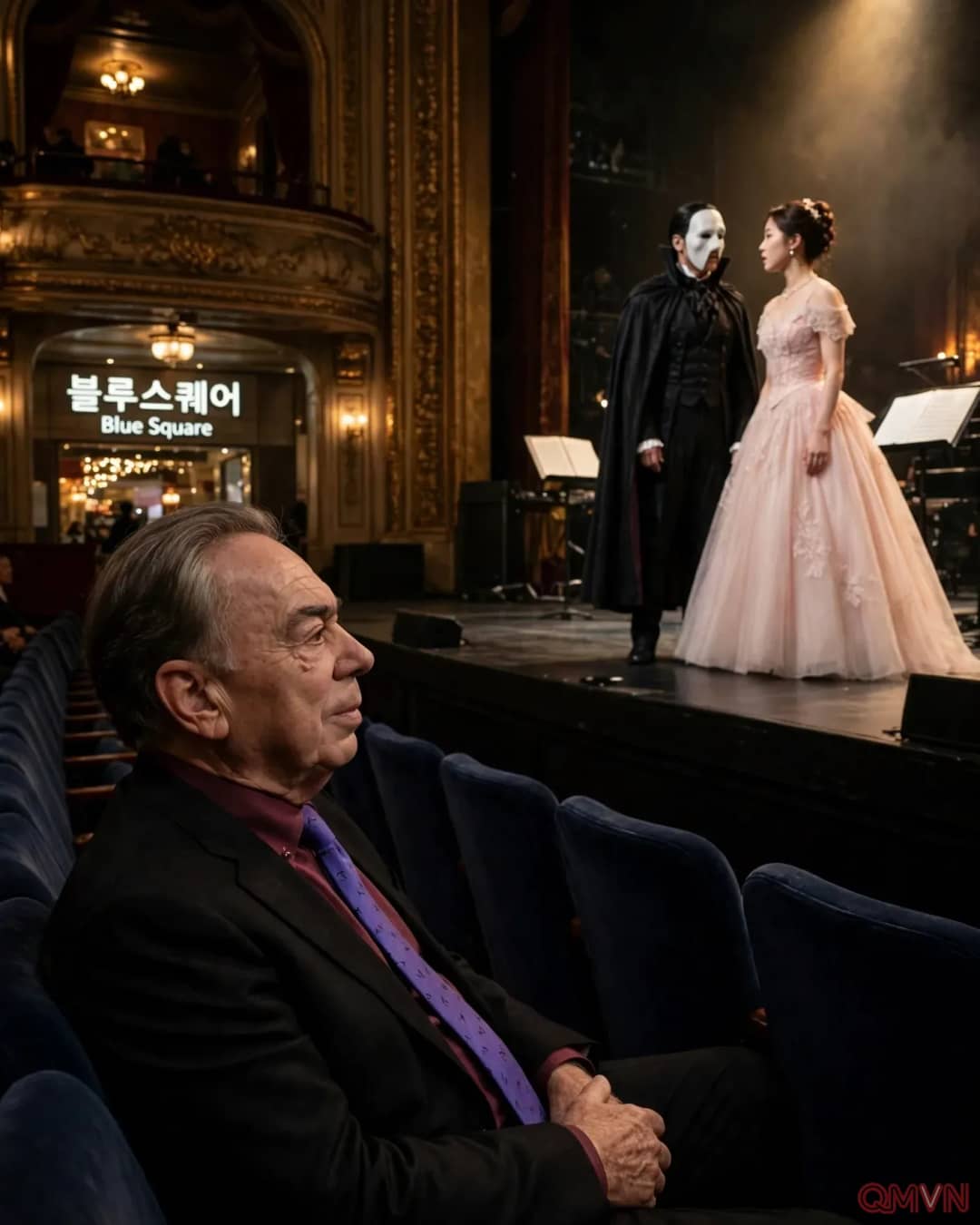
- The 40th-anniversary production runs from December 22 to February 28 at Woori Bank Hall, Blue Square, in Seoul.
Producer Seol Do-yoon recalled that in 2001, as Korea was emerging from the 1997 financial crisis, nobody would invest, yet everyone who heard the music believed the show would succeed. After attending a rehearsal on November 17, Lloyd Webber called the cast “absolutely excellent”, said the Korean language “sat beautifully on the music” and promised to return in 2027 to hear musicals written by young Korean creators.