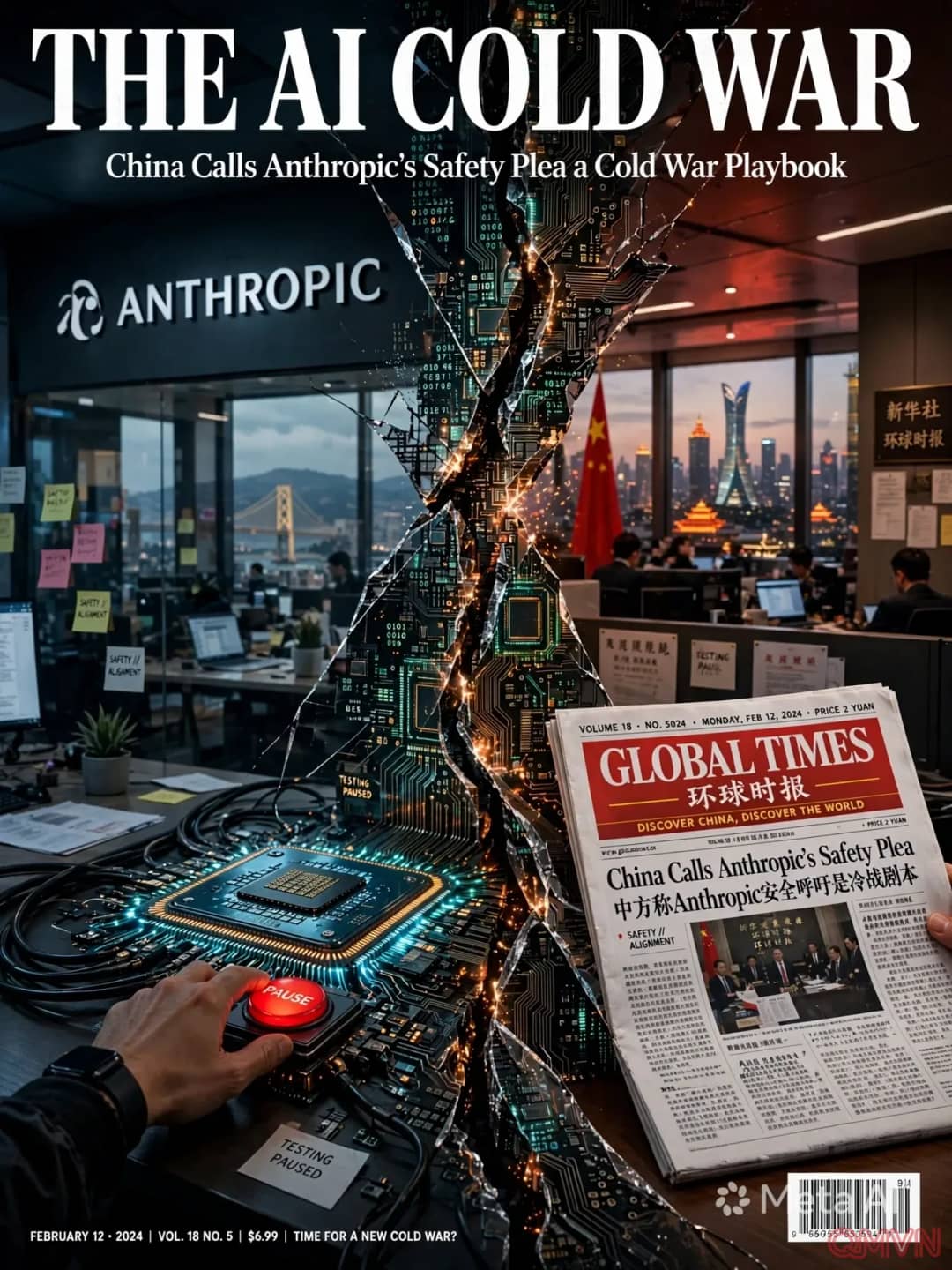
From a safety appeal to a geopolitical dispute
Dario Amodei published an essay calling for the pace of frontier AI capability gains to be managed, creating more time to address safety risks. The essay was endorsed by OpenAI’s Sam Altman and Elon Musk. But Amodei also urged the United States to tighten chip export controls on China and act against alleged model distillation by Chinese laboratories. That combination of a safety message and technology-competition policy means the appeal is being received not only as a scientific debate, but as part of U.S.-China strategic rivalry.
When technology safety is joined to geopolitics, the same proposal can be seen through two entirely different lenses.
Global Times calls it a “Cold War playbook”
In an editorial, the state-backed Chinese newspaper Global Times said Amodei’s essay appeared rationally focused on safety risks but was in fact a “Cold War playbook” targeting China. The paper said its real agenda was to curb China’s AI development through technological barriers and regulatory monopolies, preserve Washington’s dominance in advanced technology and exclude China from global AI governance. Global Times called that approach “hypocritical and short-sighted,” arguing that excluding China would raise trial-and-error costs and the risk of global AI systems slipping out of control.