MAIN CONTENT
A Landmark Orbital Return Into the Tower’s Mechazilla Arms
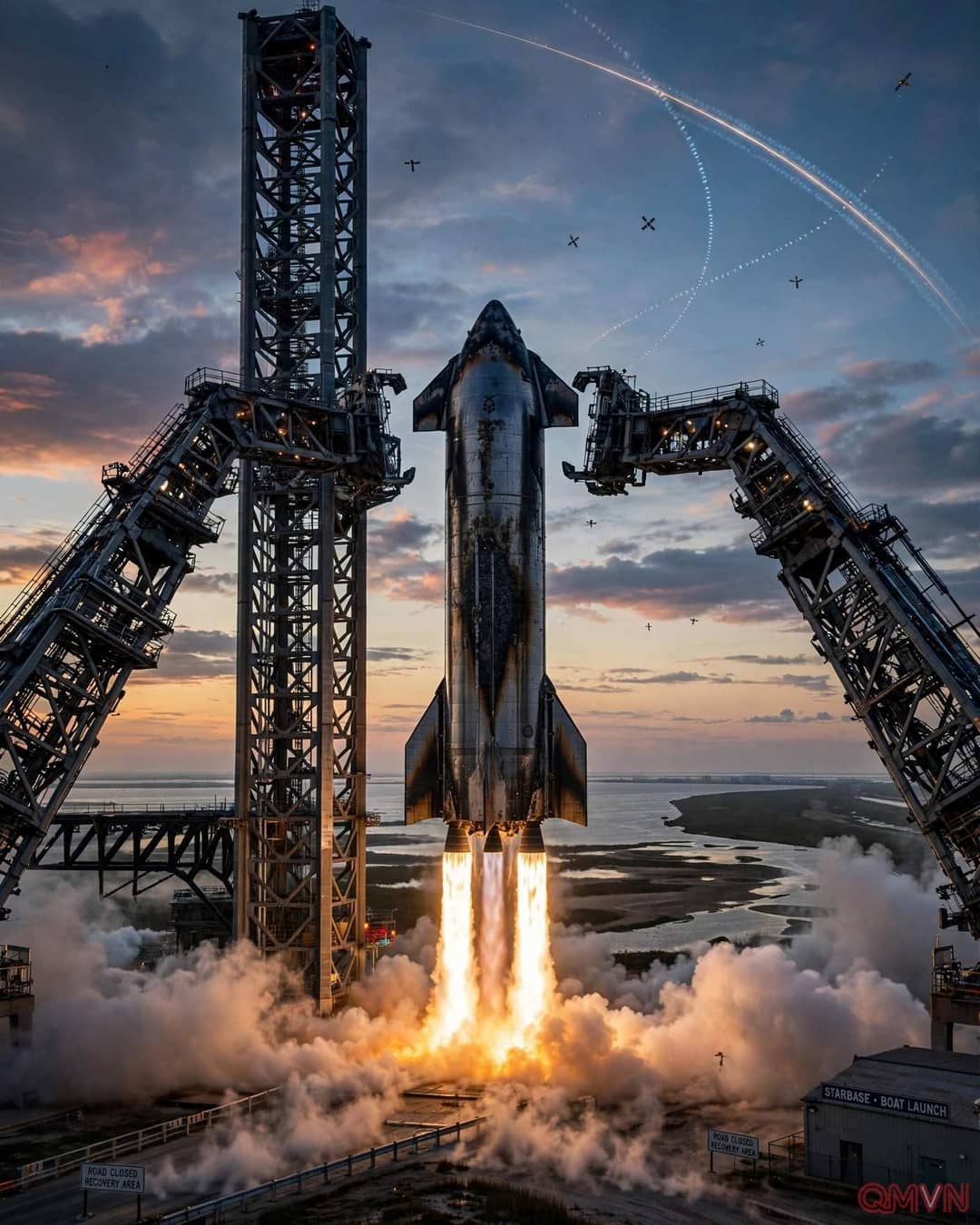
Descending out of thick clouds over SpaceX’s Starbase facility in south Texas on Saturday, November 14, 2026, the 171-foot (52-meter) Starship upper stage reignited its engines to flip vertical and eased into the waiting grasp of the launch tower’s "Mechazilla" mechanical arms. Scorched from reentry after completing 14 orbits over 22.5 hours—the longest flight yet in the program’s 15th test mission—two upper fittings hooked onto the arms, suspending the spacecraft a few hundred feet above the pad.
Before beginning its atmospheric plunge eastward over the Pacific Ocean on Saturday, Starship deployed 26 Starlink satellites on Friday night while cruising 161 miles (260 kilometers) above Earth, later decelerating from roughly 17,000 mph into a supersonic free-fall. Within hours of the catch, billionaire founder Elon Musk and SpaceX engineers began inspecting Ship 42.
"That was the missing link, the holy grail of spaceflight." Dan Huot
Advancing Full Reusability Beyond Falcon 9 and the Space Shuttle
The upper stage’s pinpoint recovery carried heightened significance after the Super Heavy first-stage booster failed to return to the launch pad roughly 10 minutes after Friday’s liftoff, deferring SpaceX’s bid to recover both rocket stages on a single flight. Unlike SpaceX’s workhorse Falcon 9—which lands its first stage after more than 700 launches since 2010 but discards its upper stage in the ocean—Starship is designed to operate with airplane-like turnaround times.