MAIN ARTICLE
A peace prize raises a question about military strength
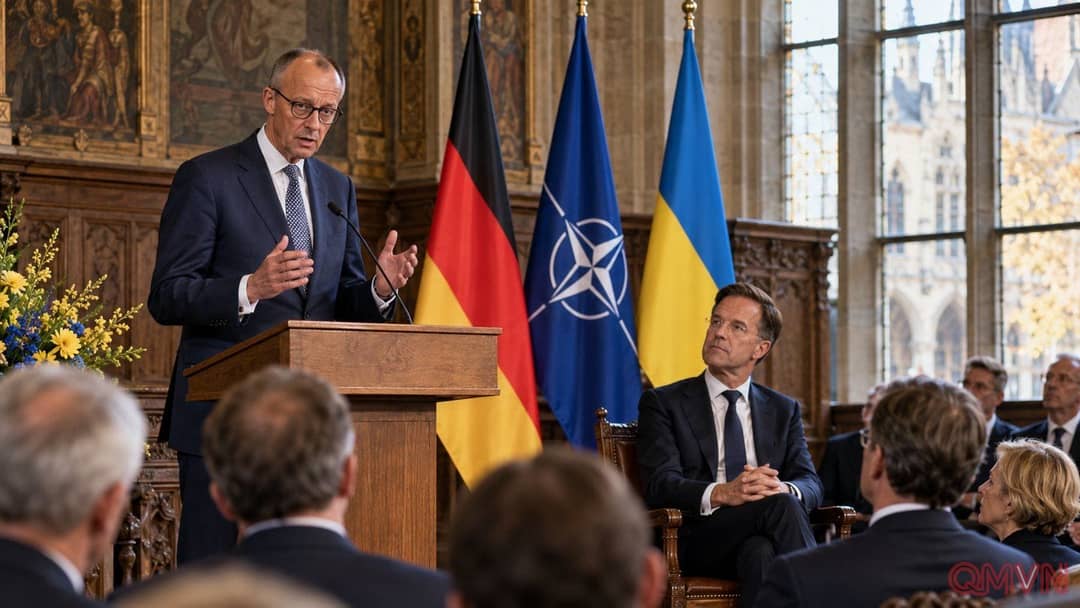
At Münster’s historic town hall, Secretary General Mark Rutte accepted the Westphalian peace prize on NATO’s behalf. In the Süddeutsche Zeitung report, journalist Daniel Brössler describes the occasion as Merz’s opportunity to move from political defensiveness to explaining his foreign policy. Earlier, Merz, Rutte and Dutch Prime Minister Rob Jetten visited the German–Dutch Corps. The sequence placed military cooperation and a public appeal for peace within the same day, giving the chancellor a setting in which to connect readiness with the prevention of war.
Merz acknowledged that awarding a peace prize to a military alliance required explanation. His argument was that defense capabilities and commitments to protect one another can help prevent war. That is the leader’s case, rather than an answer that ends every dispute about NATO. It nevertheless identifies the central question running through the speech: how to maintain enough strength to discourage conflict while keeping a route to dialogue open. The value of that balance ultimately depends on what it delivers for people exposed to insecurity.
“If we falter in Germany, then Europe falters.” Friedrich Merz