A symbol becomes a diplomatic argument
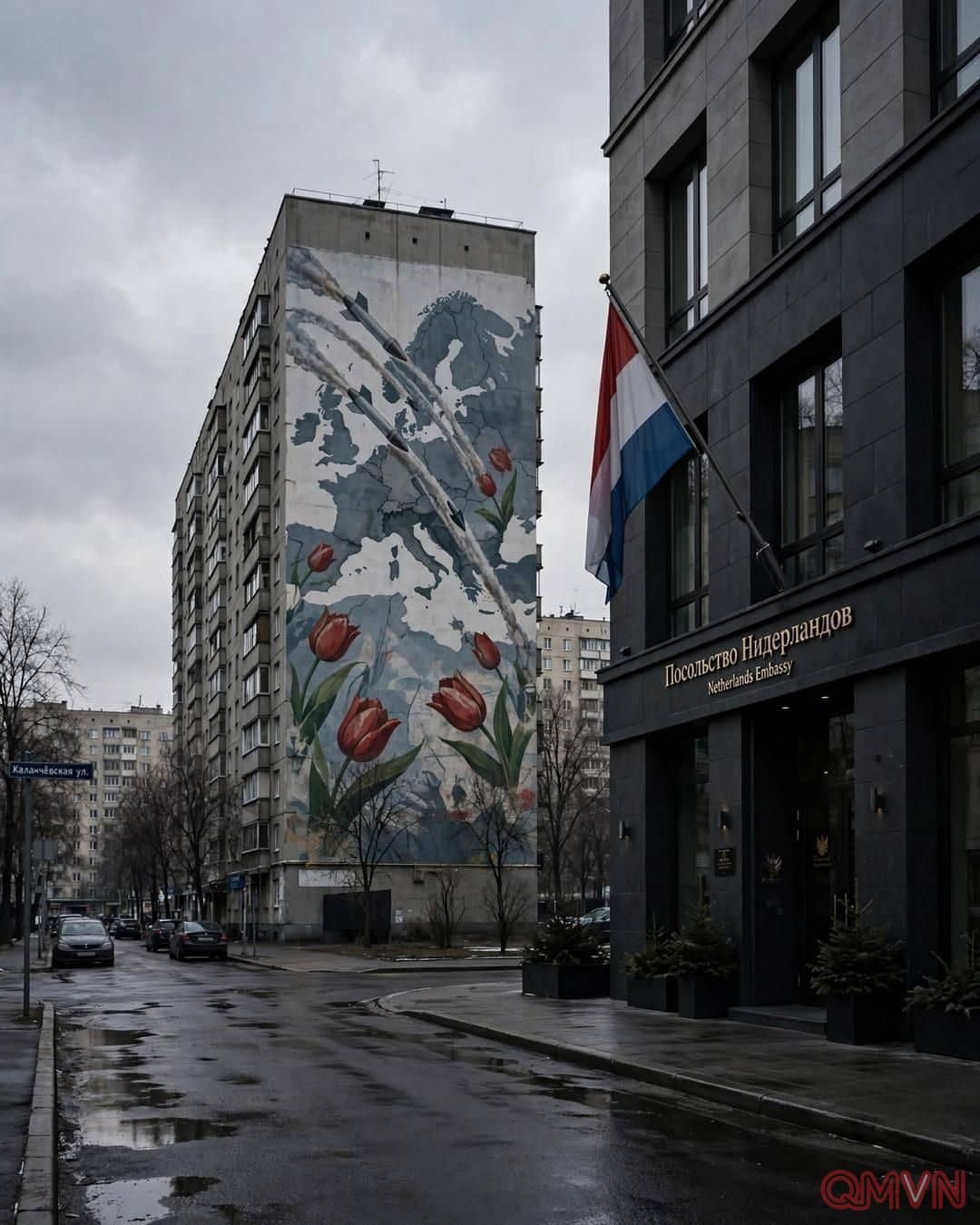
The mural turns a familiar emblem of the Netherlands into a visual accusation. Tulips, ordinarily associated with horticulture and national identity, are juxtaposed with military imagery. Its location gives the message a particular audience: diplomats, residents and anyone following the relationship between Moscow and The Hague. Reuters could not establish who commissioned or installed it. The absence of that information matters because a visible political message cannot automatically be attributed to a government.
Public imagery can compress a complicated dispute into an emotionally charged statement. Yet it cannot establish who authorised a military operation or what legal obligations arose from it. The distinction between the existence of the artwork and the truth of its implied accusation is essential to understanding the episode.
The dispute over military assistance
Destinus told Reuters earlier in November that its products had been used in a Ukrainian attack on the Crimean Bridge. Russian diplomatic representatives subsequently questioned whether the Netherlands had become a participant in the conflict.
The Dutch government disputed that interpretation. Foreign Minister Tom Berendsen maintained that Ukraine determines the use of approved Dutch exports within the framework of international law.
These positions reflect different understandings of the significance of military assistance. The Dutch government presents its support as assistance to a country defending itself, whereas Russia argues that foreign military supplies deepen outside involvement. Establishing the legal status of a particular actor requires more than identifying the national origin of equipment; it calls for an examination of the relevant facts and applicable law. A commercial statement alone cannot settle those questions.
Diplomatic premises and the danger of escalation
The dispute has also touched the work of diplomatic missions. According to Reuters, the Dutch embassy in Kyiv sustained minor damage during a subsequent Russian attack nearby. The Netherlands summoned Russia's ambassador in response. The ambassador expressed regret and reiterated Moscow's contention that its operations in Kyiv were aimed at military objectives.
Diplomatic missions perform a particularly important function during war, when communication between governments is already strained. The safety of their staff and premises is not simply a bilateral concern: it affects the ability to maintain channels for negotiation, consular assistance and crisis management. Public accusations and retaliatory rhetoric can further complicate those channels, even when governments continue formal contacts.
A wider European debate
The Dutch government's February 19, 2026, statement on Ukraine describes continued assistance encompassing military equipment, training and other support. Its published policy also identifies humanitarian and economic assistance as components of its response to Russia's invasion. These commitments place the current dispute within a broader European debate over security and the limits of external involvement.
For citizens following the controversy, the most useful questions concern what has been established, what remains disputed and what official decisions actually follow. A mural is evidence of a message being displayed, not proof of the underlying allegation. Similarly, a diplomatic protest is evidence of disagreement, not by itself a definitive legal determination.