A busy border crossing erased from the valley
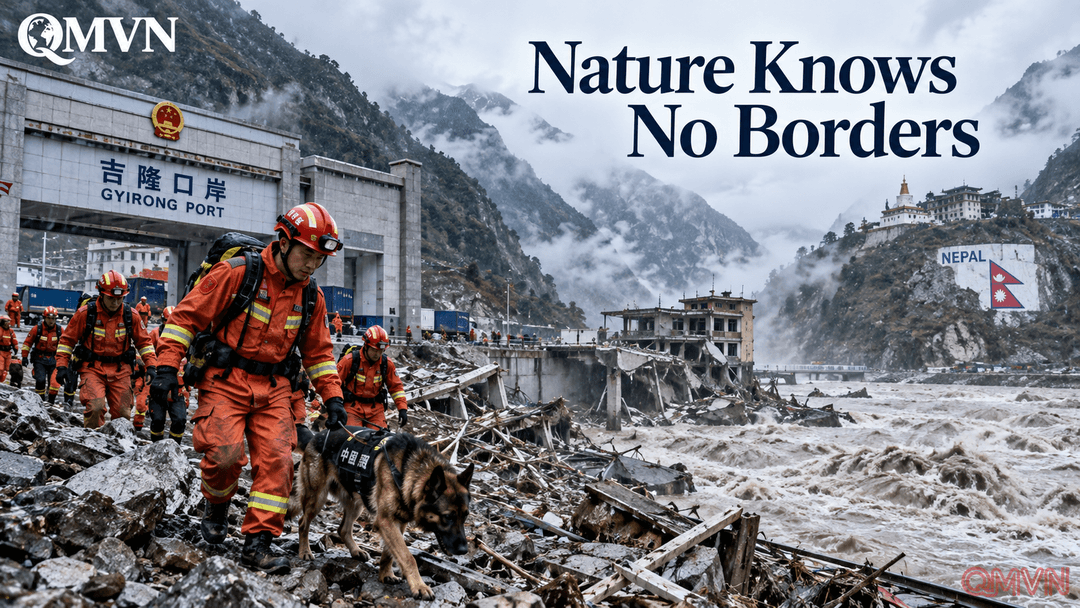
A CNN team reaching Gyirong on September 6 during a Chinese government-organized visit described a landscape where almost nothing remained of the old port. The five-storey border facility, travel agencies, supermarket and bridge toward Nepal had been destroyed. Reuters similarly found only fragments of a water installation and building foundations as rescuers used excavators, shovels and ground-penetrating radar to search beneath mud and rock.
Before August 26, hundreds of people crossed Gyirong each day toward Nepal’s Rasuwa port or in the opposite direction. Its narrow river-gorge setting made it a valuable transport corridor but also left the site acutely exposed to an enormous flood wave. When water, mud and boulders rushed through the valley, infrastructure built to connect two countries had little protection against the scale of the force.
A rescue operation in terrain that resisted access
Distance and terrain have defined the rescue challenge. CNN reported that the journey from Lhasa to Dingri took about eight hours, followed by roughly another six hours to the port. The winding two-lane mountain road was destroyed and reopened only around seven days after the catastrophe. Before then, responders had to trek, use boats or rely on aircraft under extremely difficult conditions.