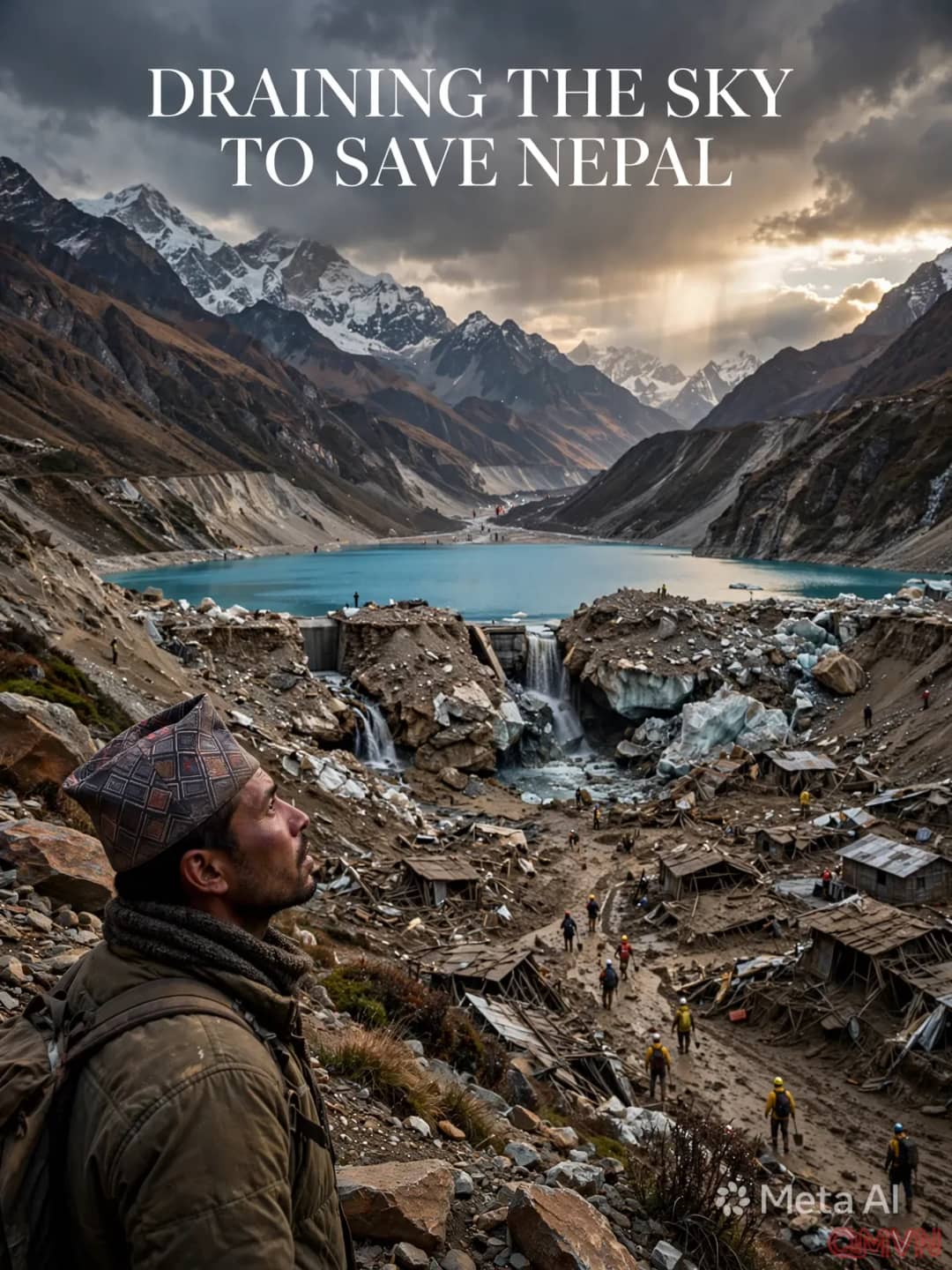
Racing against “water bombs” on the roof of the world
According to Nepal's Centre for Hydrology and Water Resources Research, the agency tasked with overseeing the project, preliminary design and detailed studies will begin in the fiscal year ending in mid-July 2027. The four lakes lie in the central and eastern Himalayas. As early as 2020, a joint report by the United Nations Development Programme (UNDP) and the International Centre for Integrated Mountain Development (ICIMOD) ranked them among the most dangerous in the country.
The engineering idea sounds simple: cut channels fitted with gated structures that gradually divert water into neighboring rivers, lowering lake levels before natural dams of loose rock and ice can give way. But working above 4,000 meters, where the air is thin and the weather turns in an instant, is a genuine test of human endurance, not to mention the danger of a sudden flood bearing down while crews are still in the lake basin.
Our aim is to lower the risk of the lakes breaching their natural dams and reduce the risk of downstream floods.