MAIN STORY
A deterrent message, not an announcement of war
The Warsaw Security Forum, held October 12–13, brings together political leaders, military officers, diplomats and security specialists. Organizers describe Grynkewich’s presentation as the first public explanation of an approach previously discussed at senior alliance level. Reports from AFP and Poland’s PAP news agency frame the initiative around a simple calculation: potential aggression should appear costly, uncertain and unlikely to succeed.
In an interview with TVP World ahead of the gathering, Grynkewich said the theory concerns how allied forces would operate if conflict occurred. That is different from revealing secret battle plans or predicting an imminent Russian invasion. A public statement of military readiness is one component of deterrence; actual operations would still involve political decisions, national responsibilities and international law. The distinction matters because language designed to discourage attack can also heighten public anxiety if stripped of its conditional meaning.
Technology cannot substitute for allied coordination
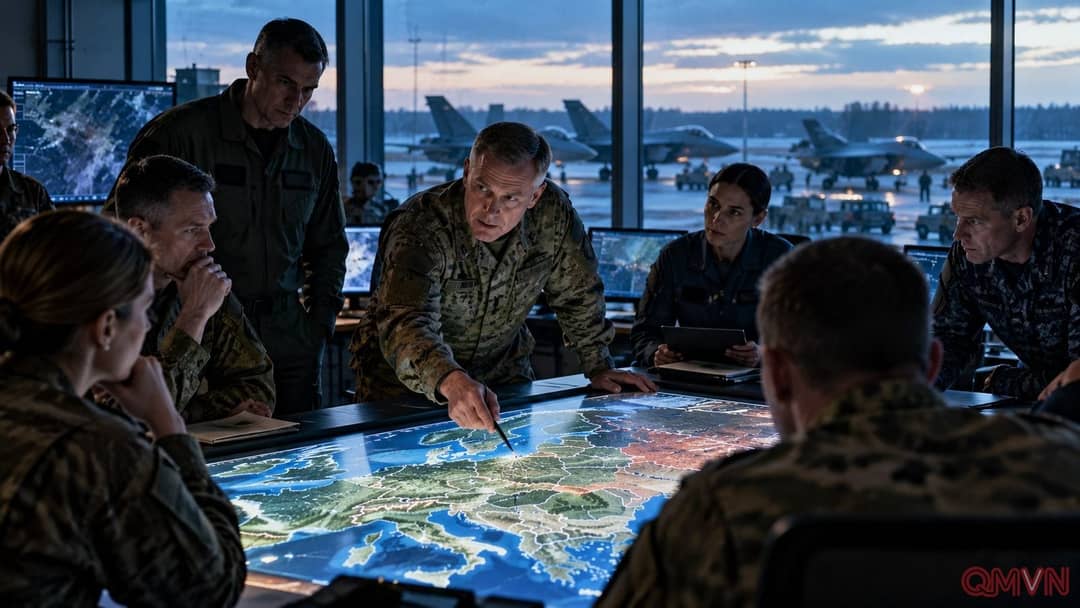
Uncrewed systems, artificial-intelligence-assisted analysis and F-35 fighters illustrate how the alliance might combine information, mobility and precision. Yet no platform can settle a complex conflict by itself.