MAIN ARTICLE
A workshop connected to distant buyers
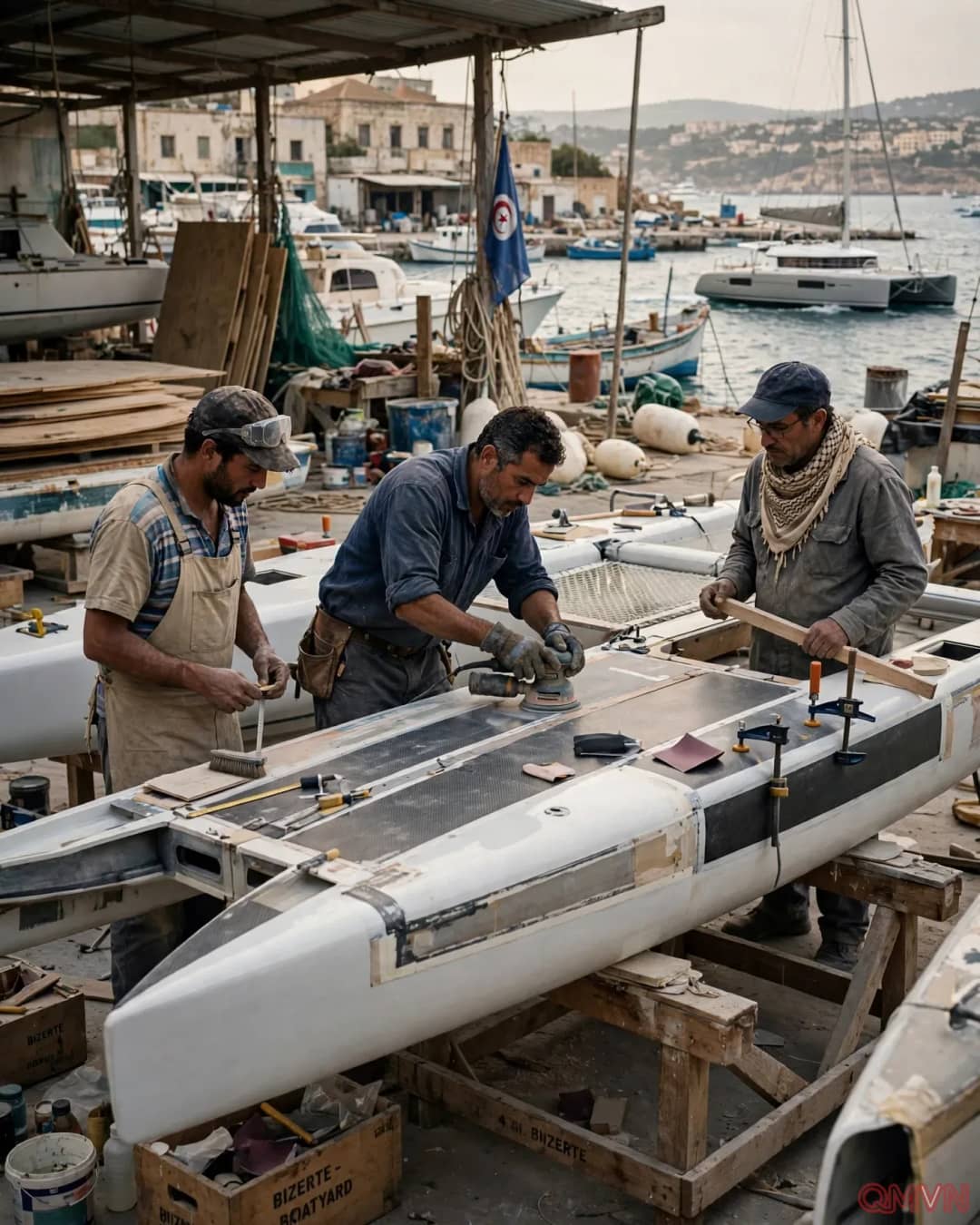
At Rassas Composites in Bizerte, technicians assemble and finish boats whose eventual owners may be thousands of kilometres away. Tarek Rassas, whose father established the business around three decades ago, told Reuters that the company now produces about ten yachts annually and employs some 60 people. Its catamarans and smaller yachts can sell for as much as €400,000 each. The transformation from small recreational vessels to more complex boats reflects accumulated experience rather than an overnight industrial miracle.
A single vessel can take two months or longer to produce. Rassas operates across five yards and wants to double output, with greater emphasis on luxury catamarans. His boats span approximately seven to 25 metres, while an 11-metre model under construction was described as having three cabins and a projected top speed of 25 knots. Those specifications illustrate the breadth of the market, but production targets remain plans, not completed sales.
The economics of a Mediterranean advantage
Tunisia's appeal combines trained industrial labour with geography. European buyers, suppliers and established shipyards are relatively close, while operating costs can be more competitive than in several mature yacht-building hubs.
The result is a niche in which specialist workmanship may matter as much as a producer's global brand. According to association president Montassar Dhiaf, the industry's membership has expanded markedly and a growing proportion of businesses are Tunisian-owned.
There is a striking domestic contrast. The yachts serve wealthy customers overseas, while average earnings in Tunisia amount to only a few hundred dollars monthly, Reuters reported. That distance makes the export story economically significant but socially complicated: higher sales may generate jobs, yet the quality of employment, training opportunities and distribution of gains determine how widely the benefits are felt. Export revenue figures supplied by the association are sector estimates, not independently audited earnings for every manufacturer.
From component supplier to full manufacturer
The sector previously relied more heavily on foreign-owned firms and parts production. Dhiaf credits foreign know-how, especially links with Italian businesses, for transferring techniques that helped local companies progress toward design, fabrication, outfitting and after-sales services. French builders including Beneteau Group also operate in Tunisia. This industrial progression matters: delivering a finished boat allows a local yard to capture more value than supplying a single component.
A visible milestone came in 2026 when the Tunisian-built WAMA 42XL won the power-under-45-foot category of the Multihull of the Year awards, a result independently listed by the awards organiser. Dhiaf also said yards around Menzel Jemil had supplied components for Cristiano Ronaldo's superyacht. The distinction is important: an award for one vessel and a high-profile supplier connection signal capability, but neither alone measures the whole sector's long-term competitiveness.
A €1 billion ambition and its obstacles
The industry association wants yacht and pleasure-boat exports to double from roughly €500 million to about €1 billion by 2030. If achieved, additional orders could generate foreign currency and employment in coastal manufacturing communities. Dhiaf has called for training centres and tax incentives, arguing that specialised skills must grow alongside production capacity. Further investment in design, materials handling, quality control and technical certification would also help firms compete for demanding international contracts.
Still, a luxury export business depends on consumer wealth abroad and can be exposed to shifting demand, financing costs and supplier delays. Growth may also strain recruitment and infrastructure. Tunisia's opportunity is therefore to build a resilient industrial ecosystem rather than merely count new hulls. Behind the glossy image of a yacht lies a chain of welders, laminators, engineers, suppliers and technicians whose work will determine whether the ambition survives the next market cycle.