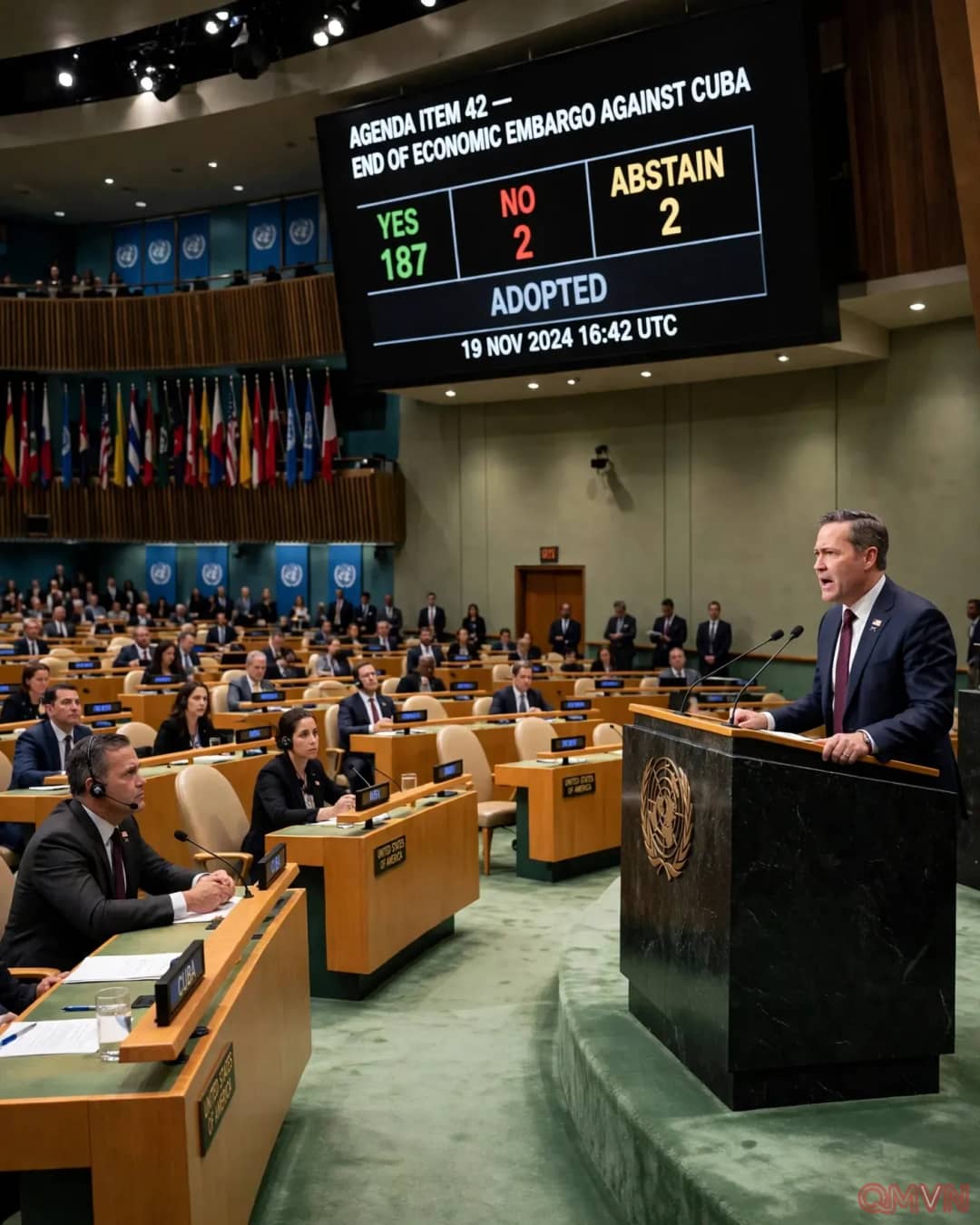
A Significant Realignment In General Assembly Balloting
The formal ballot at United Nations Headquarters concluded with 130 member states supporting the resolution, 17 nations voting against, and 25 delegations abstaining. This result marks a distinct shift from the previous year's 165-7 outcome, illustrating that Washington's diplomatic overtures have successfully fractured the long-standing international consensus surrounding Havana's appeal. Crucially, influential Western economies such as Germany and Italy, alongside major industrial partners like South Korea, adjusted their long-standing posture to register formal abstentions.
“Diplomacy takes time, but now that we've had a tripling of countries that have shifted, we expect that to only continue to grow.” — Mike Waltz
For American diplomats, this erosion of sovereign support for the anti-embargo resolution constitutes a notable tactical breakthrough in isolating Havana multilaterally. Nonetheless, international legal scholars reiterate that while General Assembly votes carry immense normative weight, statutory authority to dismantle the historic sanctions apparatus resides strictly within the United States Congress.