MAIN TEXT
Security interests redraw old alignments
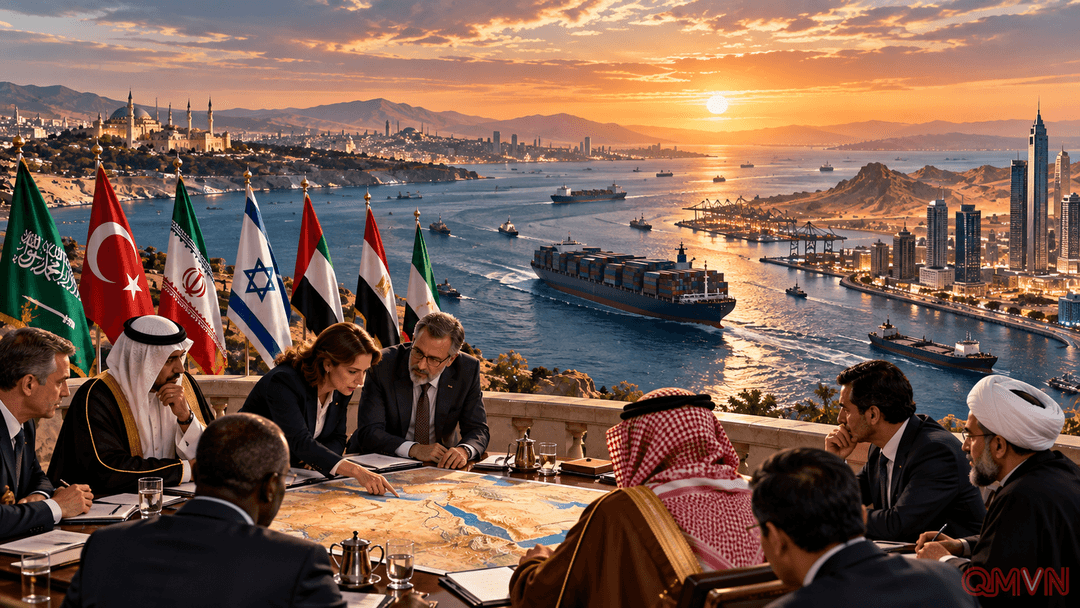
The region was once routinely explained through Sunni–Shia divisions or proximity to Washington. Those categories now offer only a partial account. Governments can simultaneously rely on American security assurances, conduct significant trade with China and purchase defense systems from other countries. Their partnerships increasingly differ by subject, including air defense, finance, food supply and transport corridors.
The Mecca defense agreement signed in August 2026 by Saudi Arabia, Turkey and Pakistan illustrates this change. The three governments have discussed arrangements for more permanent coordination. Yet mutual-defense language is not proof that each would enter every future conflict. Their operational capacity, domestic priorities and individual relationships with Iran remain substantial constraints.
Elsewhere, Israeli cooperation with Greece and India highlights the strategic importance of air defenses, technology and sea access. Gulf governments continue to preserve different diplomatic contacts despite disagreements over recent hostilities. Rather than two clearly defined blocs, the emerging picture is a network of overlapping alliances and rivalries.