MAIN STORY
When restraint becomes a market signal
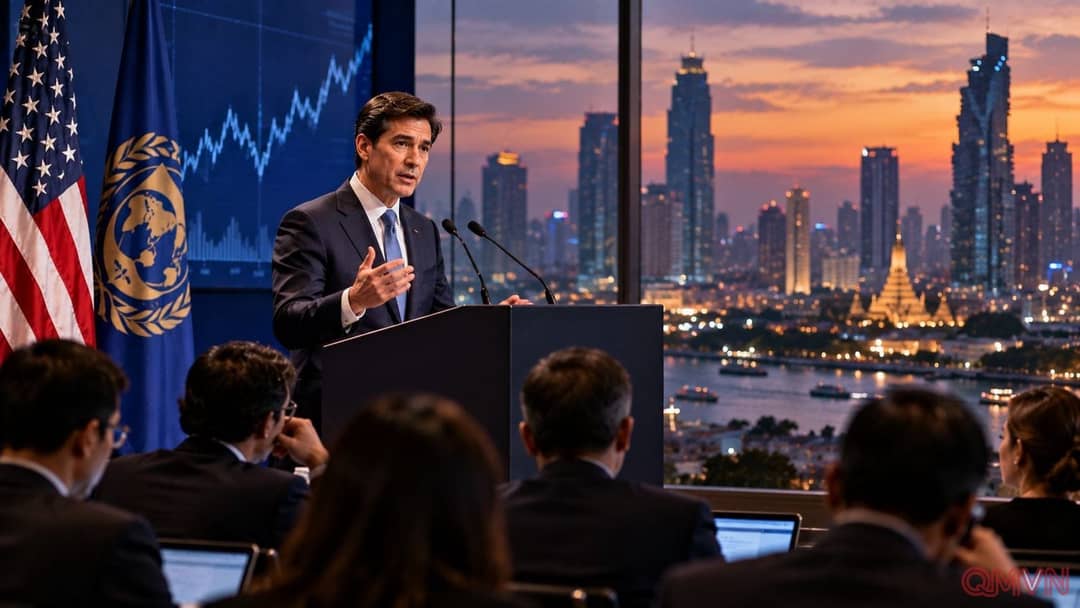
Warsh’s most consequential message at the IMF gathering was arguably what he chose not to promise. He reaffirmed the Fed’s price-stability mandate and noted that the central bank had withdrawn some monetary accommodation about a month earlier. But he neither pledged another increase nor ruled one out, underscoring his reluctance to preannounce votes.
Traders nevertheless drew a practical inference. On the market probabilities cited by the Singapore newspaper, the chance of an October increase dropped from around 27% to under 15%. S&P 500 futures recovered from losses and the dollar softened. These were investors’ reactions to an ambiguous speech, not confirmation of any future Fed decision.
Inflation still clouds the outlook
The Fed raised its policy rate by a quarter percentage point in September, its first increase since 2023, taking the target range to roughly 3.75%–4%. At the time, a majority of policymakers anticipated that another increase might be warranted before the end of 2026. Their projections, however, did not amount to a fixed calendar for tightening.