MAIN ARTICLE
A daily necessity becomes an emergency
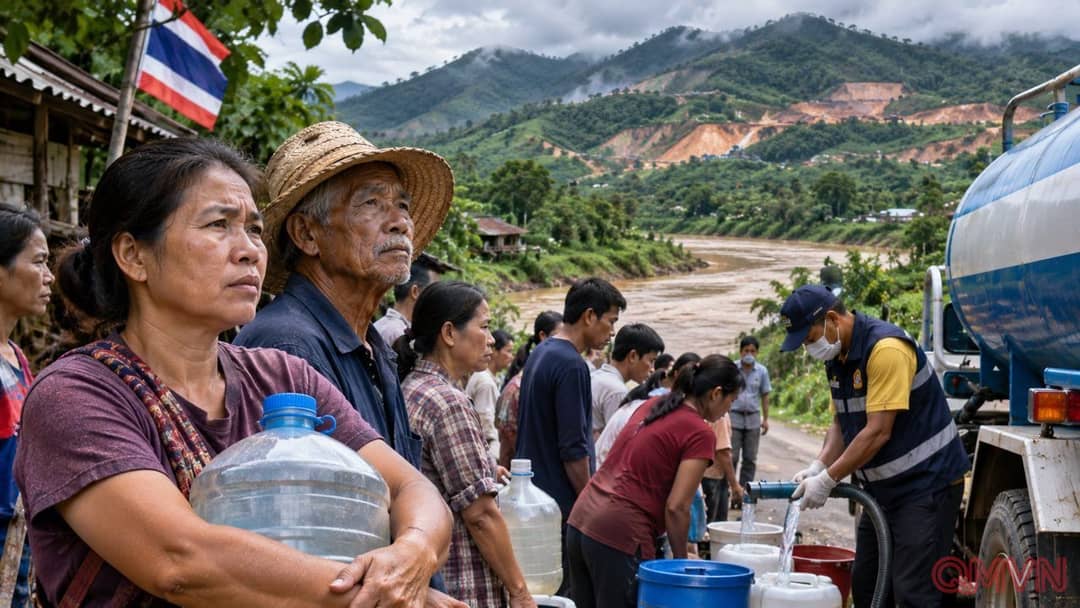
Thai authorities were arranging clean water for more than 20,000 households in 14 Mae Sai villages on November 18, according to reporting by The Straits Times. Anutin instructed agencies to seek alternative sources and closely monitor Chiang Rai’s tap water. Two water trucks were deployed for emergency relief. Yet drinking, cooking, sanitation and the needs of schools and clinics require dependable supplies that go beyond occasional deliveries.
An interruption at a waterworks does not mean every household tap has the same concentration of arsenic. Local water authorities say production is suspended when intake water fails safety checks or becomes too cloudy for reliable treatment. Sampling is conducted at multiple stages, before and after treatment. Residents therefore need location-specific instructions rather than assumptions based solely on measurements taken directly from the river.
What the alarming readings actually mean
Thailand’s National Nanotechnology Center reported Sai River arsenic readings near 0.30 milligrams per litre during the early-November episode. That is thirty times the 0.01 mg/l reference commonly used for drinking-water safety.