MAIN ARTICLE
A warning about industrial readiness
Hung Cao, a Navy veteran of roughly three decades, portrayed US maritime industry as standing at a consequential turning point. In his prepared testimony for confirmation as Navy secretary, he invoked a “1939 moment,” recalling the period when American industrial mobilization began to gather force before US entry into World War II. That comparison does not prove a new conflict is inevitable. It highlights the difficulty of creating industrial capacity only after a security emergency has arrived.
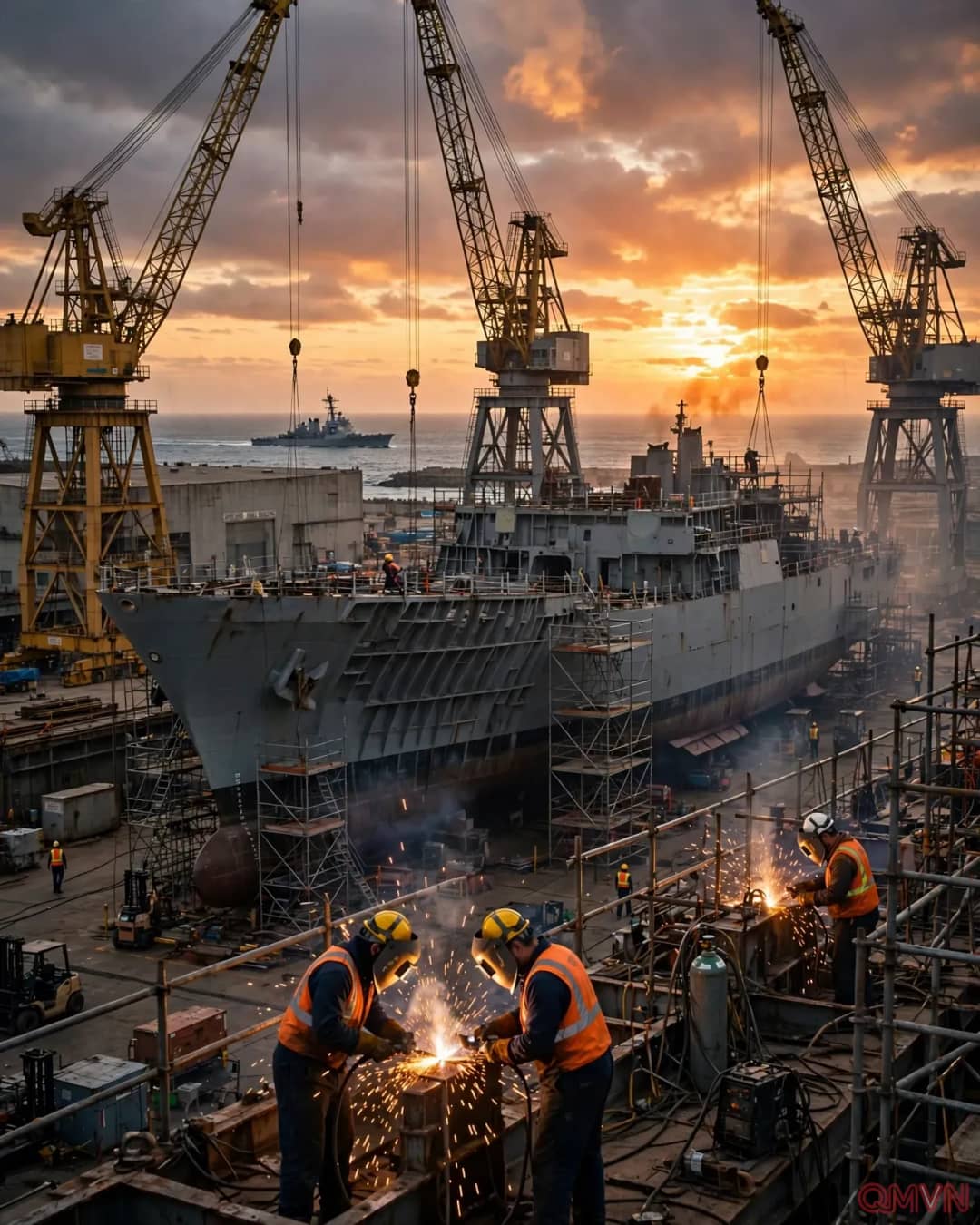
Cao called for predictable federal resources and long-term investment in welders, engineers, assembly workers, suppliers and infrastructure. Warship production is an intricate sequence: a shortage of one specialized trade or component can delay a vessel even when other resources are available. The fundamental challenge therefore reaches beyond the number of ships Congress authorizes in a single budget cycle.
How far can allied shipbuilders help?
South Korea and Japan possess substantial commercial and naval shipbuilding experience, modern yards and sophisticated production methods. A study published by the Center for Strategic and International Studies in August 2026 identified several avenues for cooperation: allied investment in American shipyards, shared fabrication of ship sections, selected purchases of allied-built vessels, and expanded overseas maintenance and repair. Each faces distinct legal, security and operational constraints.