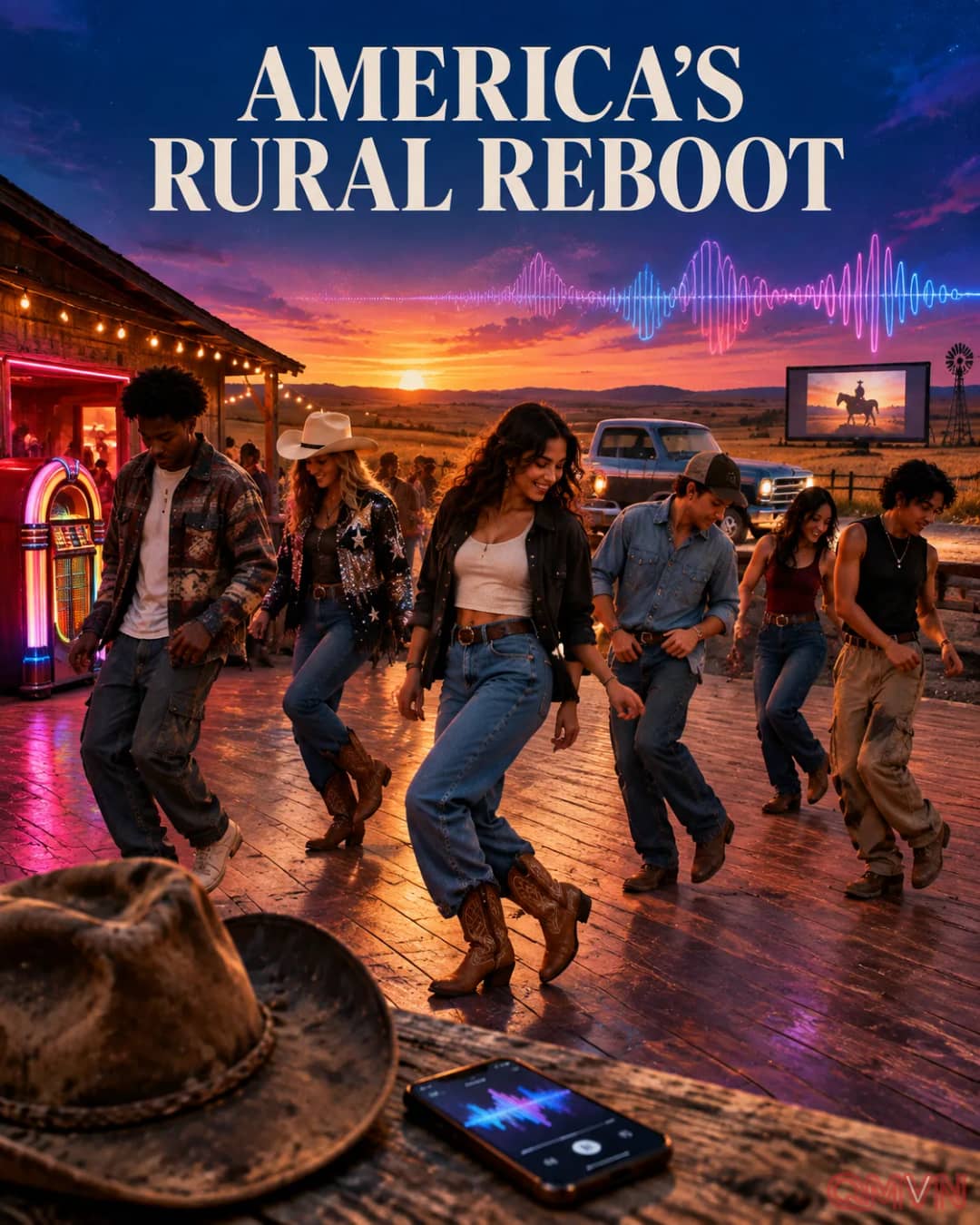
A Paradox Between A Diversifying Nation And A Rural Cultural Wave
In the first week of August, for the first time ever, all five top spots on the Hot 100 chart belonged to country songs. Even Taylor Swift's latest release, a poppy tune tied to the movie "Toy Story 5," has been marketed as country, seemingly to capture the advantages of the genre she left behind back in 2014. According to Nielsen's multi-platform ratings, four of the top ten television shows this season are westerns or neo-westerns, including "Landman" and "Dutton Ranch." Notably, Coors beer has seen 31 percent growth among Gen Z drinkers, showing this wave extends well beyond music and television alone into fashion, food, and lifestyle more broadly. Commentators have also pointed to politicians adopting rural signifiers, from a Nebraska-raised candidate who drives a classic farm vehicle to a Senate hopeful known for wearing pearl-snap shirts, as another sign that rural aesthetics now carry broad cultural currency well beyond any single party or region.
When Authenticity Becomes A Prized Commodity
Cultural observers argue that for decades, country music carried associations with a conventional, white America, while Black art forms like hip-hop or bebop offered consumers a nonconformist thrill precisely because of their marginalized status. Today, that dynamic appears to have flipped. After trading for decades on its countercultural identity, hip-hop became thoroughly conventional, reaching a peak market share of nearly 30 percent in 2020, the very year one in five Fortune 500 companies pledged support for racial justice.