MAIN CONTENT
A partnership at the intersection of industry and resource security
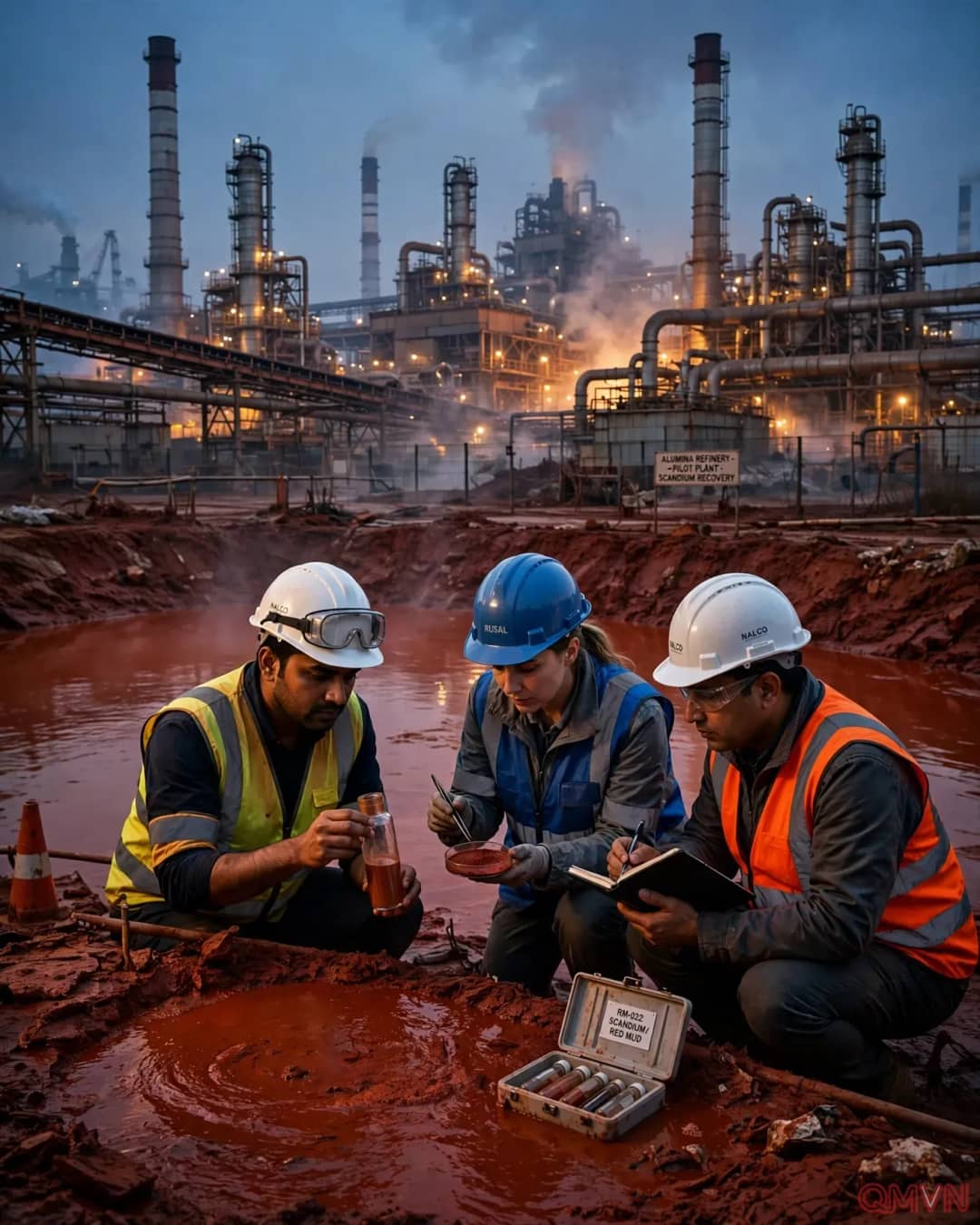
NALCO said the memorandum was signed on November 17 during the 44th International Conference and Exhibition of the International Committee for Study of Bauxite, Alumina and Aluminium (ICSOBA) in Bengaluru. The partners intend to exchange technical knowledge and assess potential routes for extracting scandium from red mud. The announcement identifies a direction for cooperation but does not establish a production target, an investment budget or a timetable for commercial output.
That distinction matters. Industrial research may begin with laboratory analysis of residue composition, move through separation and purification trials, and only later reach a pilot plant or investment decision. Every stage can alter the economics. The announcement offers a strategic possibility rather than proof that a new Indian source of scandium already exists.
Why red mud contains both promise and difficulty
Red mud is the strongly alkaline residue produced in the Bayer process, the dominant method for turning bauxite ore into alumina. It contains iron-bearing compounds and other minerals, sometimes including trace amounts of scandium.