MAIN TEXT
The announced pause still lacks clear terms
According to the AP report updated on October 12, Donald Trump announced on social media that both countries had accepted an energy ceasefire. He did not specify its duration, the facilities covered or procedures for addressing violations. Moscow had not immediately responded when that report was updated. A U.S. announcement therefore needs to be distinguished from an agreement publicly confirmed and implemented by both belligerents.
Volodymyr Zelenskyy welcomed the announcement but reported continuing attacks in Kyiv and Kharkiv. Ukraine’s presidential office said the strike on a Kharkiv power plant came after Donald Trump’s post. These accounts represent Ukrainian reporting; no joint monitoring mechanism had been publicly announced to establish compliance independently. Kyiv said it was ready to stop striking Russian energy infrastructure if Russia showed corresponding restraint. That conditional position leaves implementation central to any assessment of progress.
Electricity and heating shape the prospects for winter
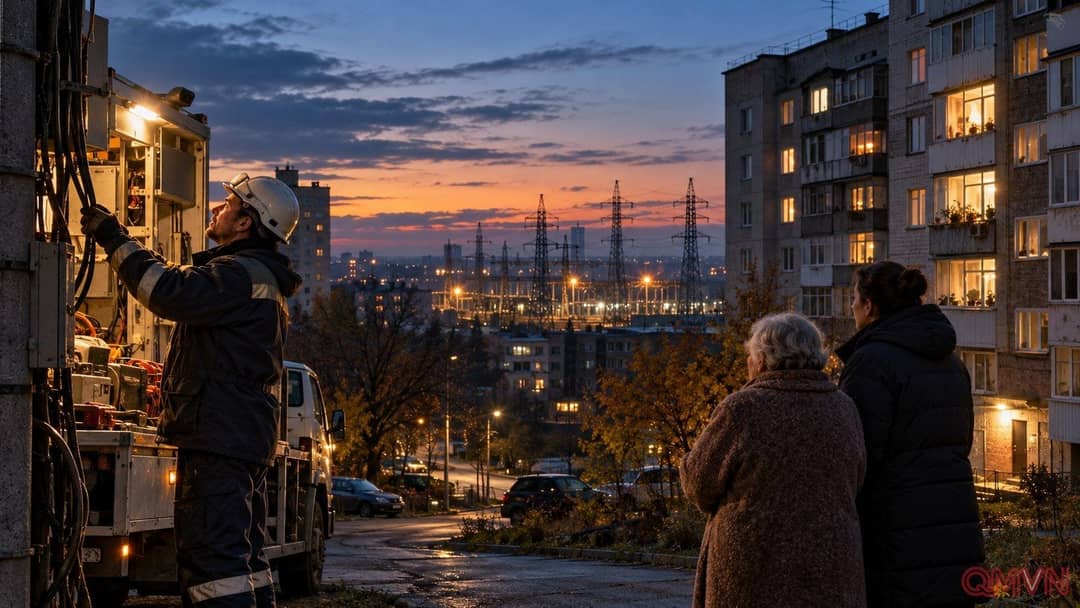
For a household, a power outage can mean falling indoor temperatures, difficulty preparing meals and interrupted communication. In a high-rise building, a stalled elevator can isolate someone with limited mobility. When electricity for water pumps or heating systems fails, the consequences extend well beyond the point of impact. This explains why protecting the electricity network matters so much to civilians, even when diplomatic arguments focus heavily on oil prices and refinery operations.