MAIN STORY
A proposal with immediate market consequences
MSCI’s statement dated October 15 in the United States landed in Asian markets on October 16. Its language marked a sharper turn than investors had anticipated. Rather than merely question whether Indonesia qualified as an emerging market, the index provider argued that a move to frontier-market status might not adequately capture the seriousness of the concerns reported by its institutional clients. It therefore proposed a standalone classification, beyond its mainstream emerging- and frontier-market products.
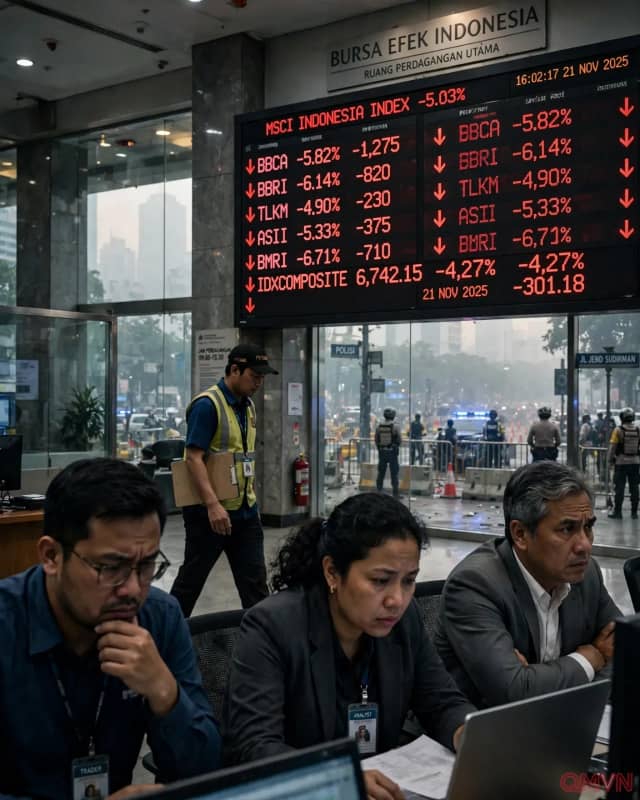
The Wall Street Journal reported that Jakarta’s benchmark opened roughly 8% lower, triggering a temporary trading halt, before losses exceeded 10%. If sustained through the close, that would mark its steepest daily percentage decline since the 2008 financial crisis. The rupiah traded around 18,045 to the US dollar. These figures describe conditions at publication, not necessarily official closing prices. Index trackers may ultimately face forced portfolio adjustments, while active managers could cut Indonesian exposure before any decision takes effect.
According to the Wall Street Journal on October 16, the Jakarta Composite Index’s year-to-date fall was nearing 40%. Separately, Reuters reported approximately $4.7 billion in net selling by overseas investors during the year. Both figures describe a prolonged loss of confidence and cannot be attributed solely to this one announcement.