Technological bottlenecks and escalating grey-market hardware premiums
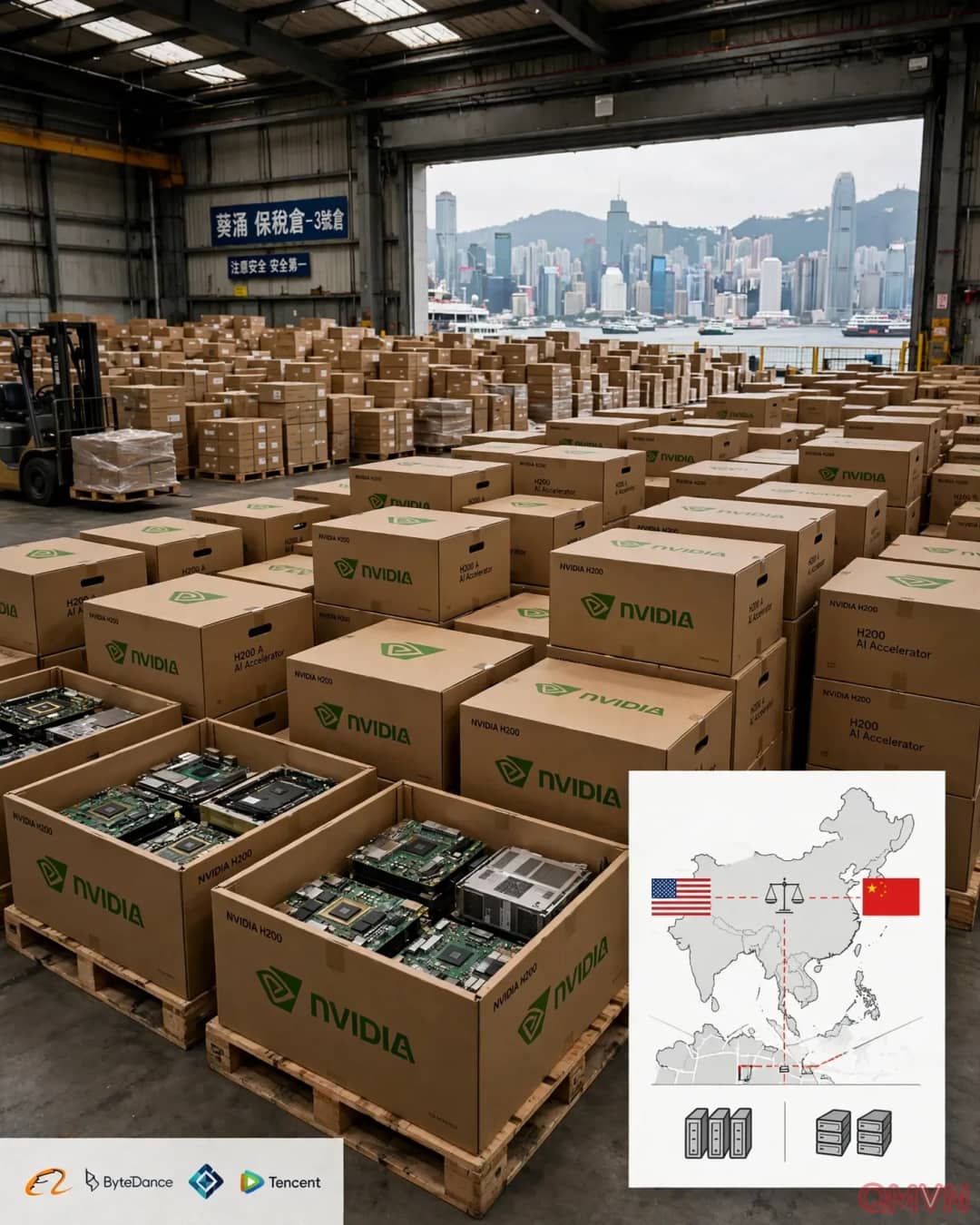
The substantial accumulation of approximately 600,000 Nvidia H200 graphics processing units in Hong Kong illustrates the growing divergence between state industrial self-reliance mandates and commercial private enterprise requirements across China. Major internet conglomerates, including ByteDance, Alibaba, Tencent, and DeepSeek, face soaring infrastructure requirements to train frontier generative models. Although the H200 does not represent Nvidia's bleeding-edge architecture, its high-bandwidth memory capacity and seamless CUDA software integration provide performance thresholds that domestic Chinese semiconductor fabricators currently cannot replicate.
Sources familiar with regional logistics indicated that regulatory agencies have sanctioned only nominal consignments in recent months, permitting select internet operators to acquire approximately 10,000 units each under strict administrative oversight. With authorized distribution pathways severely bottlenecked, commercial demand has migrated toward clandestine third-party intermediaries.
By late October, an eight-card H200 server command configuration traded in mainland markets at prices exceeding 6 million yuan (approximately 900,000 dollars), nearly triple prevailing baseline prices from the preceding year, while servers utilizing blacklisted Blackwell architectures commanded over 20 million yuan.
Beijing wanted domestic technology firms to prioritize Chinese processors for inference while permitting limited foreign purchases for foundational model training.
Geopolitical trade friction and large-scale alternative hardware procurement
The regulatory gridlock ensnaring the H200 chips is an immediate reflection of broader bilateral trade and technology frictions between Washington and Beijing. The United States originally barred exports of the high-performance processor under sweeping 2022 commerce controls, before the Trump administration granted specific export exemptions for vetted Chinese customers following bilateral negotiations. Rather than opening unrestricted market access, Chinese administrative bodies established rigorous domestic quota restrictions to insulate indigenous semiconductor ecosystems from foreign displacement.
Approximately 600,000 high-end Nvidia H200 artificial intelligence processors remain in storage across Hong Kong logistical facilities.
Chinese regulatory approvals remain capped below 200,000 units, compelling tech firms to utilize domestic processors for model execution.
Grey-market server costs for eight-way H200 clusters surged past 6 million yuan ($900,000), tripling annual price averages.
Chinese technology leaders placed orders exceeding 35 billion dollars for over 3 million export-compliant RTX Pro 5500 cards.
Regulatory ministries in Beijing emphasize domestic chip utilization to counter long-term United States technological containment.
To maintain algorithmic development momentum while navigating state-mandated constraints, Chinese technology groups have engaged in massive parallel procurement campaigns. Leading domestic internet platforms recently committed over 35 billion dollars to secure more than 3 million export-compliant Nvidia RTX Pro 5500 graphic accelerator cards. This large-scale procurement pivot reflects strategic enterprise adaptation, enabling developers to scale compute clusters within legal compliance parameters while bureaucratic deliberations over top-tier accelerator imports persist.
The massive stockpile in Hong Kong reflects Beijing's reluctance to increase reliance on US technology at a sensitive geopolitical juncture.