Polls open across Western and Mountain states as nationwide in-person voting expands in 2026 midterms
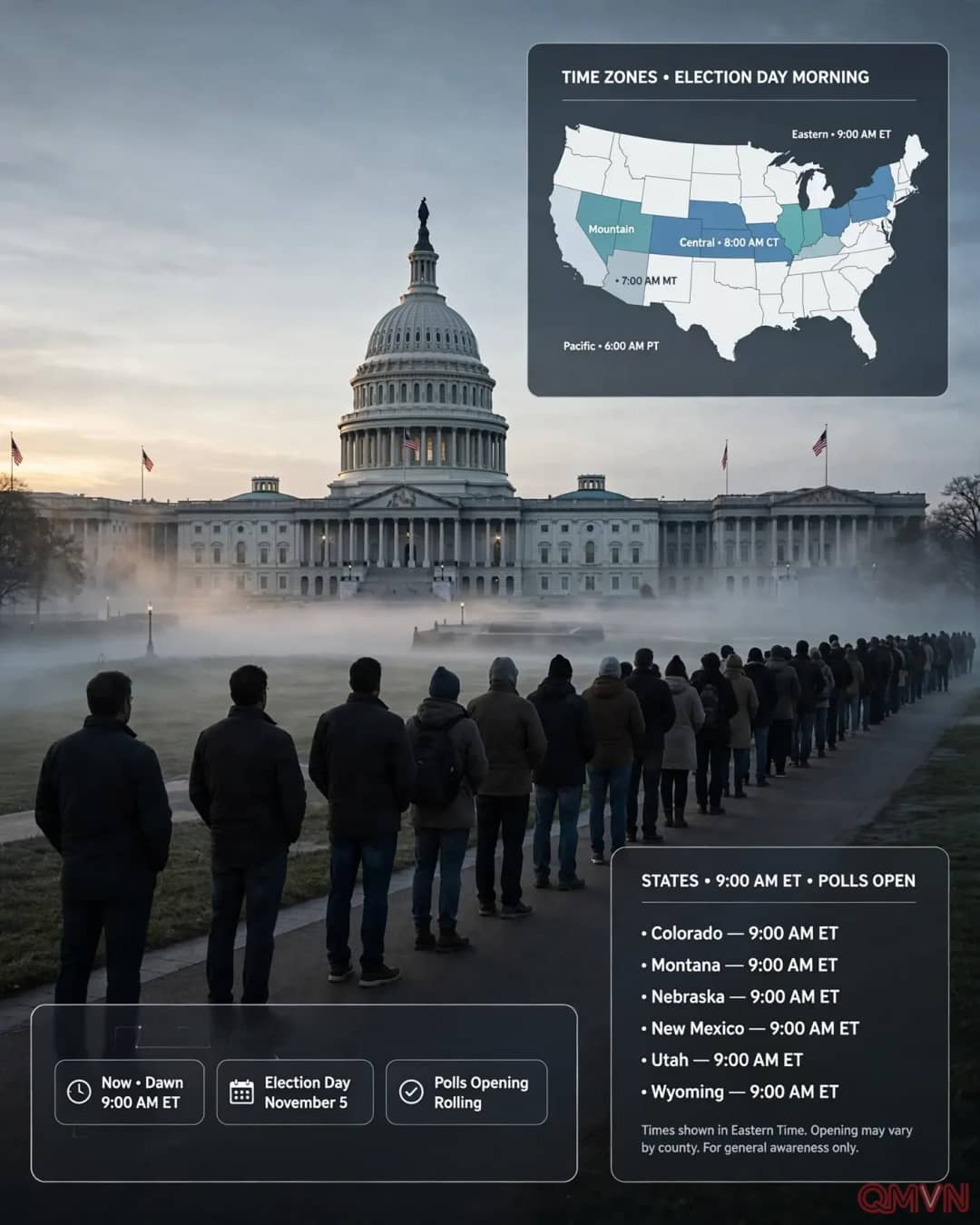
Just past 9:00 a.m. Eastern Time on Tuesday, November 3, 2026, physical polling locations opened across dozens of additional jurisdictions as the nationwide wave of midterm voting advanced into the American West. In-person balloting commenced at 9:00 a.m. ET across six western and mountain states: Colorado, Montana, Nebraska, New Mexico, Utah, and Wyoming. While precise municipal opening schedules vary across county jurisdictions, this western operational rollout represents the second major continental wave of Election Day, significantly broadening voter participation across crucial congressional battlegrounds that will determine legislative control of Capitol Hill for the next two years.
Edite QUANG MINH·2 min read · 3 min listen·3 November 2026, 09:13 EST·
AI-generated illustration
MAIN BODY
The 9 a.m. ET polling commencement across six western states
Advertisement300 × 250
As the clock crossed 9:00 a.m. ET, election precincts across the Mountain and Western regions initiated ballot scanning and check-in procedures. The sequential activation of polling facilities pushes the total volume of operational balloting centers into dozens of states nationwide.
*"Though poll opening times are not definitive, in-person voting was to have begun from 9 a.m. ET in six states." — Catherine Nicholls, National Election Correspondent*
The six western jurisdictions initiating in-person balloting in this phase comprise Colorado, Montana, Nebraska, New Mexico, Utah, and Wyoming. Across vast geographical expanses and rugged terrain, local election boards deployed equipment and trained workers to ensure accessible voting infrastructure for both rural ranchers and urban communities.
• In-person polling formally expanded across six western states shortly after 9:00 a.m. Eastern Time on Tuesday.
• The participating states include Colorado, Montana, Nebraska, New Mexico, Utah, and Wyoming.
• Dozens of states across multiple continental time zones are now simultaneously conducting in-person election procedures.
Strategic significance of the Western bloc for congressional majorities
The activation of voting across the Western states introduces vital electoral data into the national ledger, particularly for high-stakes Senate contests and marginal House districts. States like Montana and Nebraska feature intensely competitive Senate battlegrounds that could decide the upper chamber’s balance of power.
*"The opening of western polling stations marks the seamless expansion of democratic mobilization from the Atlantic seaboard to the Rocky Mountains." — National Congressional Campaign Monitoring Group*
Furthermore, in resource-intensive jurisdictions such as Wyoming—where motorists and agricultural producers face severe diesel cost inflation exacerbated by geopolitical conflicts in the Middle East—electoral participation serves as a direct referendum on federal economic management.
• Western states feature critical Senate and House races that directly dictate legislative majorities in Congress.
• Voters in agricultural and energy-producing states express acute sensitivity to retail fuel prices and federal tariffs.
• Decentralized county voting facilities are operating securely under state administrative and independent observer oversight.
EVENT BACKGROUND
This operational milestone occurred during the morning of Tuesday, November 3, 2026, marking the progressive advancement of Election Day for the 2026 United States midterm elections. Because the continental United States spans four primary standard time zones, in-person balloting unfolds in a staggered chronological sequence, beginning at 6:00 a.m. Eastern Time along the Atlantic coast before progressing to Central, Mountain, and Pacific jurisdictions. The group of six states opening at 9:00 a.m. ET—Colorado, Montana, Nebraska, New Mexico, Utah, and Wyoming—encompasses vast agricultural, mining, and suburban populations with distinct regional economic concerns. The core crux of this western wave lies in the tension between historic conservative voting discipline in resource-dependent regions versus localized voter discontent over trade tariffs and soaring diesel prices under President Donald Trump’s administration, rendering every precinct in the Rocky Mountain corridor vital to the ultimate balance of power in Washington.