MAIN CONTENT
The conference and the missing colleagues
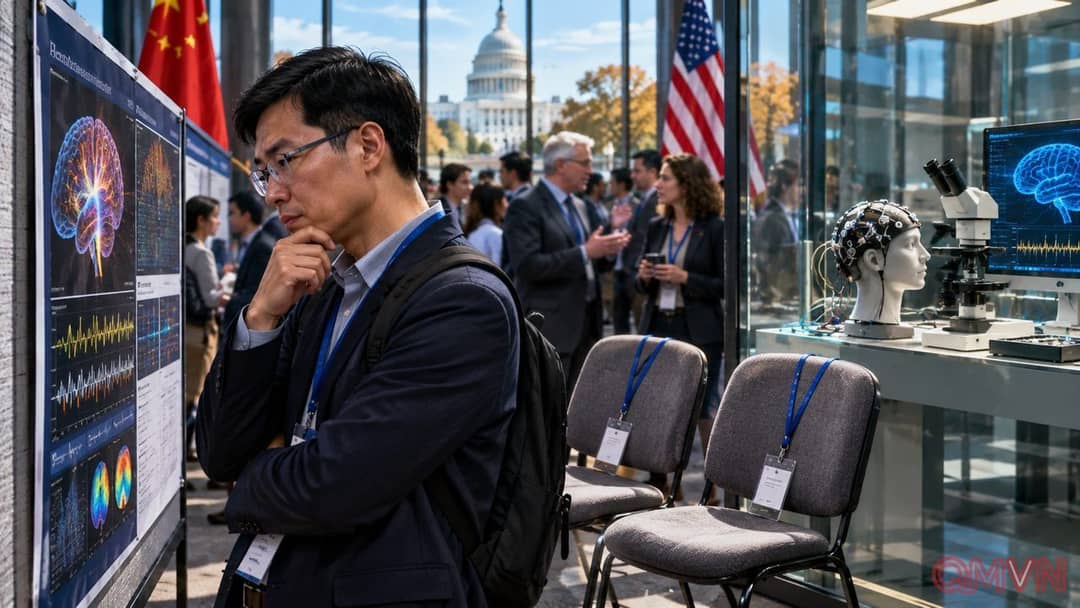
The Society for Neuroscience held its annual meeting in Washington from November 14 to 18, 2026. According to the South China Morning Post, six members of Li Yulong’s Peking University team were accepted to present research on detecting neural signals, yet two did not obtain visas. Public reporting does not establish whether their cases resulted from a particular security restriction or another administrative reason.
Li has attended the gathering regularly since his student years in 2000. For a laboratory, such a meeting is more than a sequence of lectures. A hallway conversation can lead to the independent testing of a method, a new collaborator or the beginnings of a clinical project. The loss caused by an absent participant is therefore difficult to capture simply by counting missed presentations.
When national security enters the laboratory
Technological rivalry has made Washington more attentive to dual-use research: tools that help medicine can also intersect with advanced sensing, artificial intelligence or military capabilities. In July, Nature reported concern among lawmakers from both major US parties about the exploitation of American research, although they differed on remedies.