Rejecting quasi-membership
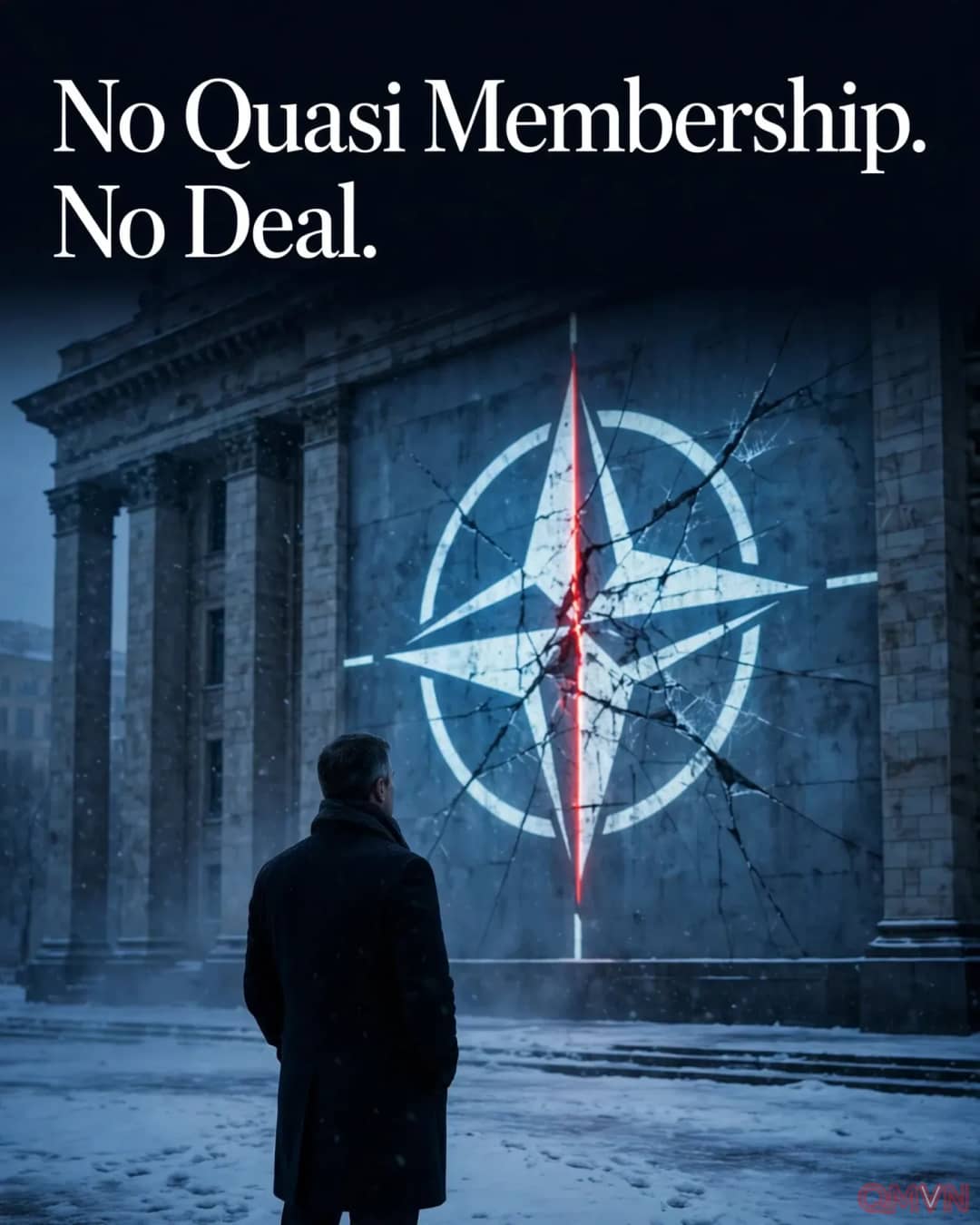
Asked whether Article 5-style guarantees for Ukraine would be acceptable to Russia, Ryabkov told the Interfax news agency that even the notion of a formula for Ukraine's quasi-membership of NATO, or the search for some kind of creative solution in this area, was an option Moscow could not accept. Russia, he said, discusses security guarantees first and foremost in terms of its own security.
Article 5 is NATO's core collective defence clause, deeming an attack on one member an attack on all and obliging allies to come to its aid. For Moscow, extending any comparable protection to Ukraine would amount to bringing the Western military alliance to its doorstep. Ryabkov set out a clear precondition:
…the irrevocable nature of our demand that this state must not join NATO.
From Berlin, the NATO question reopened
On November 19, German Chancellor Friedrich Merz hosted a Coalition of the Willing summit in Berlin under the banner of unity for peace in Ukraine and European security. Afterwards, Macron said the issue of Ukraine's NATO membership should be revisited.
At the same event, Kushner said he and Witkoff had made the Russians more comfortable with the concept that any security guarantee for Ukraine would rest on Article 5.
Earlier, Ukrainian President Volodymyr Zelensky said US negotiators had for the first time floated NATO membership for Ukraine in exchange for a withdrawal from the Donbas region. Ryabkov's response shows how wide the gap remains between what Washington believes it has achieved and Moscow's public position.
Kyiv's stance and the sticking points
Ukraine has long maintained that a just peace must include reliable security guarantees and must not force it to surrender more territory. The negotiations continue to revolve around four main sticking points:
- Ukraine's NATO membership, which Moscow treats as a red line.
- The form and binding force of Article 5-style security guarantees.
- Russia's demand that Ukraine cede the entire Donbas region, which Kyiv firmly rejects.
- Europe's role at the table, as Moscow resists widening the negotiating format.
Zelensky has signalled readiness to set aside Ukraine's NATO bid if Kyiv receives security guarantees similar to those enjoyed by alliance members, stressing that this already represents a compromise on Ukraine's part.
These security guarantees are an opportunity to prevent another wave of Russian aggression.
Europe at Moscow's door
Ryabkov confirmed that a possible visit to Moscow by representatives of Britain, Germany and France was being prepared. A day earlier, President Vladimir Putin said Russia had invited the European envoys to come and clarify their position on the peace negotiations before the format of further talks is decided.
Kushner had earlier said Washington was now focused on facilitating direct engagement between Russia and its European partners, while stressing that NATO remains a critical pillar of European security. Kremlin aide Yuri Ushakov, however, had objected to expanding the negotiating format. Amid these mixed signals, the coming meetings will test how far diplomacy can narrow the gap.