MAIN ARTICLE
A 2,000 MW proposal emerges from summit diplomacy
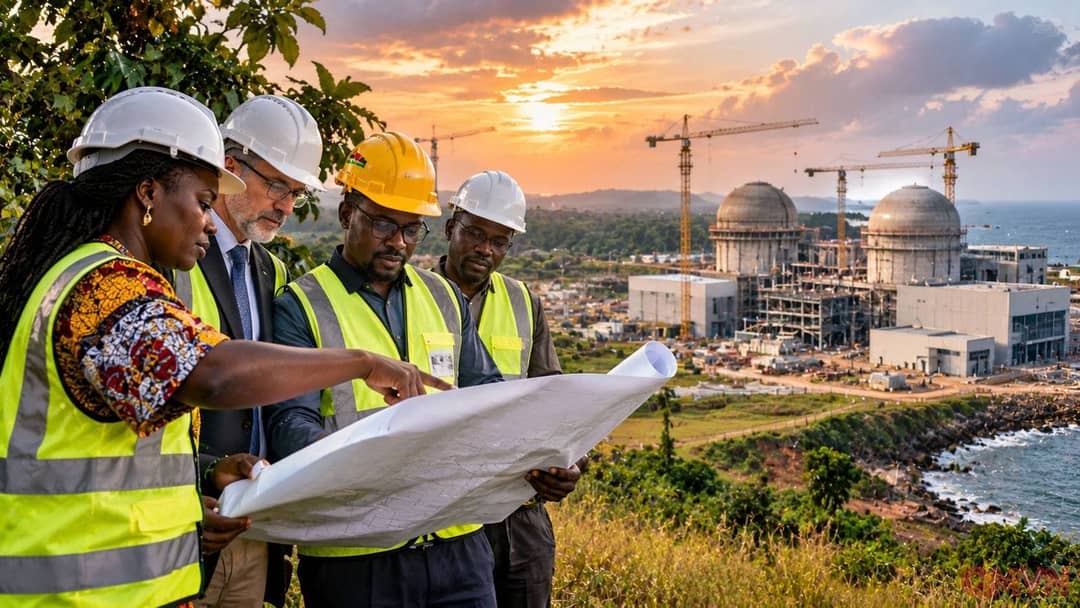
Reuters reported that Foreign Minister Samuel Okudzeto Ablakwa said Russia had agreed to work with Ghana on developing a 2,000 MW nuclear power plant. The announcement followed bilateral discussions on October 30 alongside the third Russia–Africa Summit. Ghana presented the initiative as a way to reinforce energy security and support industrialisation.
Russian state nuclear company Rosatom had already said it was discussing large power-plant projects with Ghana, Uganda, Ethiopia and Egypt. Nevertheless, an agreement to cooperate is an early-stage signal, not proof that construction has been contracted. The announced arrangement has not yet specified financing, the final site, the plant's reactor configuration, ownership or a commissioning date.
The development case for reliable electricity
An economy seeking to process minerals locally, expand manufacturing and attract technology businesses needs dependable power over decades. Nuclear generation can deliver continuous output with low direct carbon emissions in operation, making it a possible complement to hydroelectricity, thermal generation and renewable sources. This explains much of Ghana's interest.