A chance find inside an old quarry
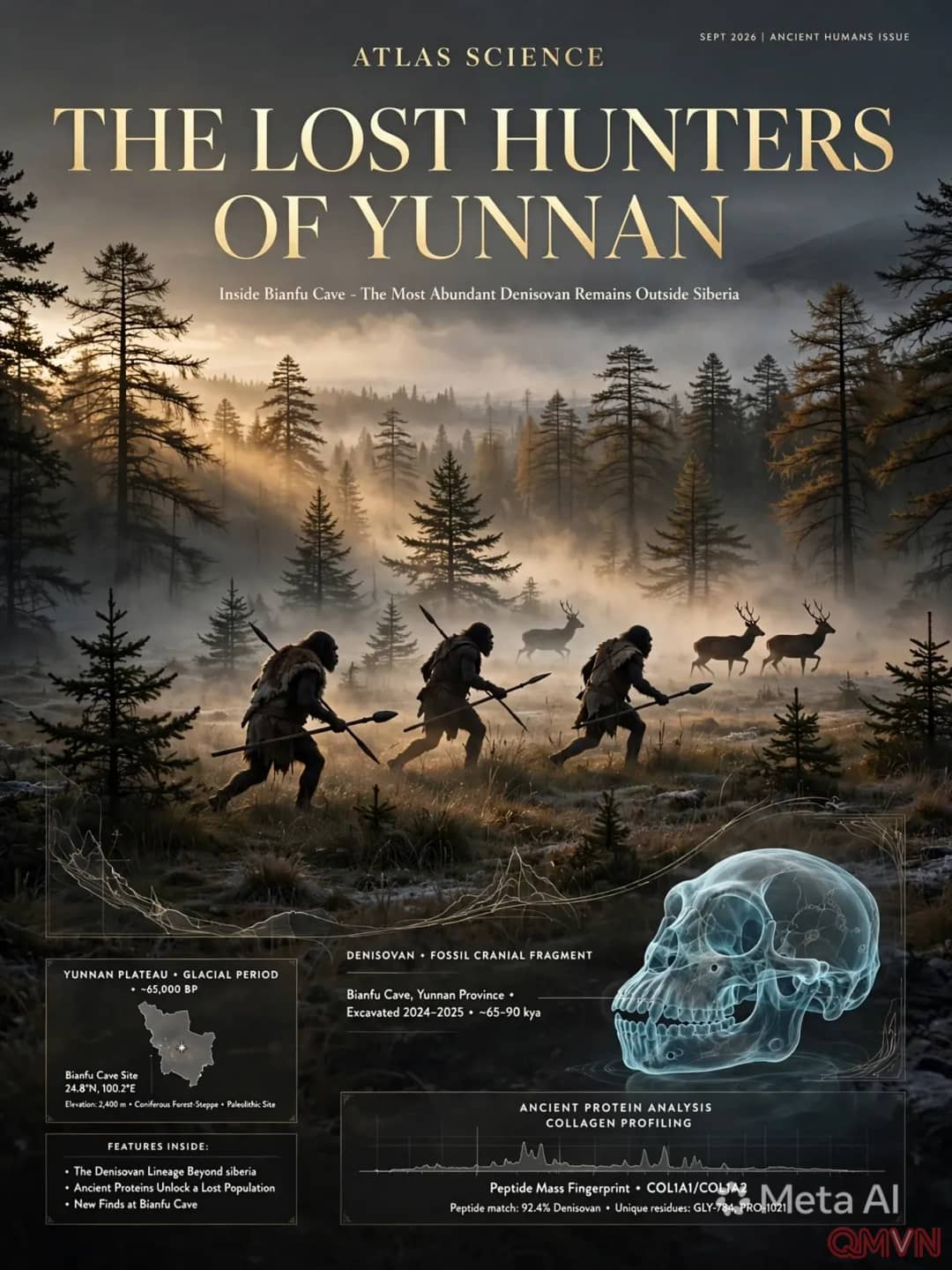
In 2019, workers restoring an old quarry site in Yunnan province stumbled across bones and stone tools buried in the sediment of a cave later named Bianfu Cave. Archaeologists soon began excavating three trenches at the site, digging to a depth of 6.6 metres, though only one trench yielded human fossils, found within two sediment layers dated to between 134,000 and 167,000 years ago. Stone tools, by contrast, turned up across ten separate layers, suggesting the cave may have been occupied on and off across a span running from 190,000 to 70,000 years ago, a duration that surprised even the researchers involved in the excavation.
Ancient protein analysis, led by Qiaomei Fu of the Institute of Vertebrate Paleontology and Paleoanthropology at the Chinese Academy of Sciences, confirmed that seven of the fossils belonged to Denisovans: four teeth, two cranial fragments and part of an arm bone. The arm bone is one of only a handful of Denisovan fossils ever recovered from below the skull, and the new haul brings the global tally of confirmed Denisovan fossils to more than 20 — a striking increase given how few specimens of this hominin group have surfaced anywhere since it was first identified.
Skilled hunters of the conifer forest
Alongside the fossils, researchers recovered more than 1,300 stone tools as well as tools fashioned from bone. Cut marks and distinctive fracture patterns on the bones of red deer, sika deer, water buffalo and the bison-like gaur point to deliberate hunting and butchery rather than scavenging.