From Fearing A Weak Germany To Fearing A Strong One
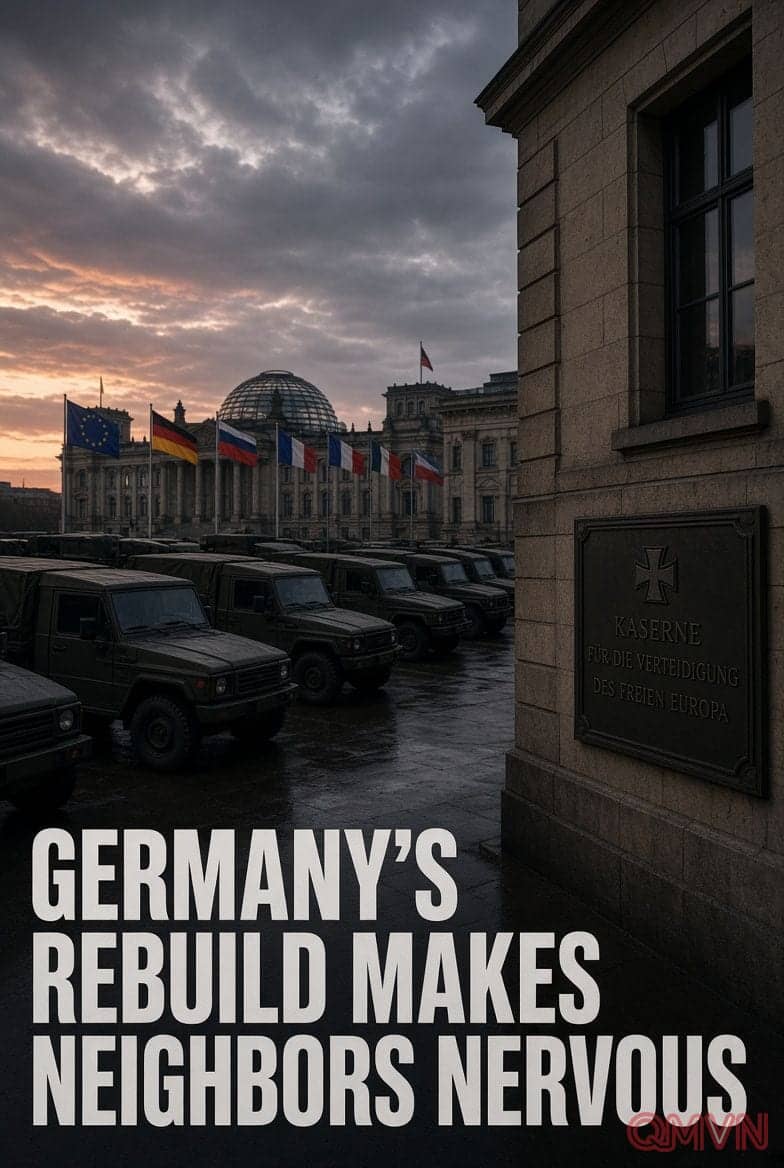
Just a few years ago, Germany was widely criticized for benefiting from the military umbrella provided by the US, France and Britain without contributing its fair share. President Donald Trump led pressure on Berlin to raise defense spending to match its economic weight. Now, some European officials worry about the opposite problem: that rearmament could shift the continent's balance of power, with a heavily armed Germany and Russia emerging as Europe's two largest military powers, while Berlin might eventually revert to appeasing the Kremlin to avoid direct conflict. Last year alone, the German government secured defense contracts worth more than three times those awarded in Britain, according to the Kiel Institute for the World Economy. The shift is stark: only a few years ago, jokes circulated among NATO officials that the alliance's top military post in Europe, traditionally held by an American, might one day go to a German general.
The Ghost Of The 'German Question' And The Rise Of The AfD
Historians call this the 'German question,' a 19th-century debate over how powerful a unified Germany could become before it threatened peace; after two world wars, the answer was 'not too powerful.' Concerns deepened after the AfD won a record 43.8% of the vote in the eastern state of Saxony-Anhalt earlier this month, while Merz's Christian Democratic Union took just 17.2%, its worst-ever result there.