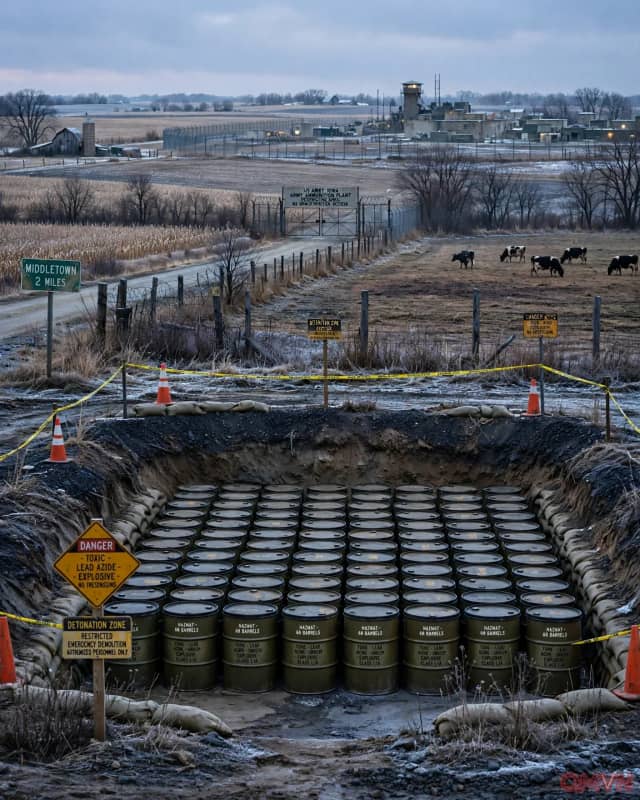
How a stockpile became a hazard
The stockpile holds roughly 9,700 pounds of lead azide in 68 barrels, including about 6,900 pounds of lead, stored at the plant for more than two decades. The compound had been kept stable in a mixture of water and ethanol. In March, technicians found that the liquid had evaporated and needle-shaped crystals had formed, leaving the material so sensitive to friction and temperature changes that even opening the barrels was deemed unsafe, according to a court declaration.
The Army says it considered chemical neutralisation and moving the drums to an on-site detonation facility, but rejected both because handling them could cause an accidental blast. Burying the barrels was also ruled out.
This emergency is of the Army’s own making.
What residents are being told
On November 15, the Army released two plume maps showing how lead particles could spread in the air and settle on the ground, depending on wind conditions. Guidance for people in the projected path includes several steps: