Main story
How a powerful model teaches a smaller one
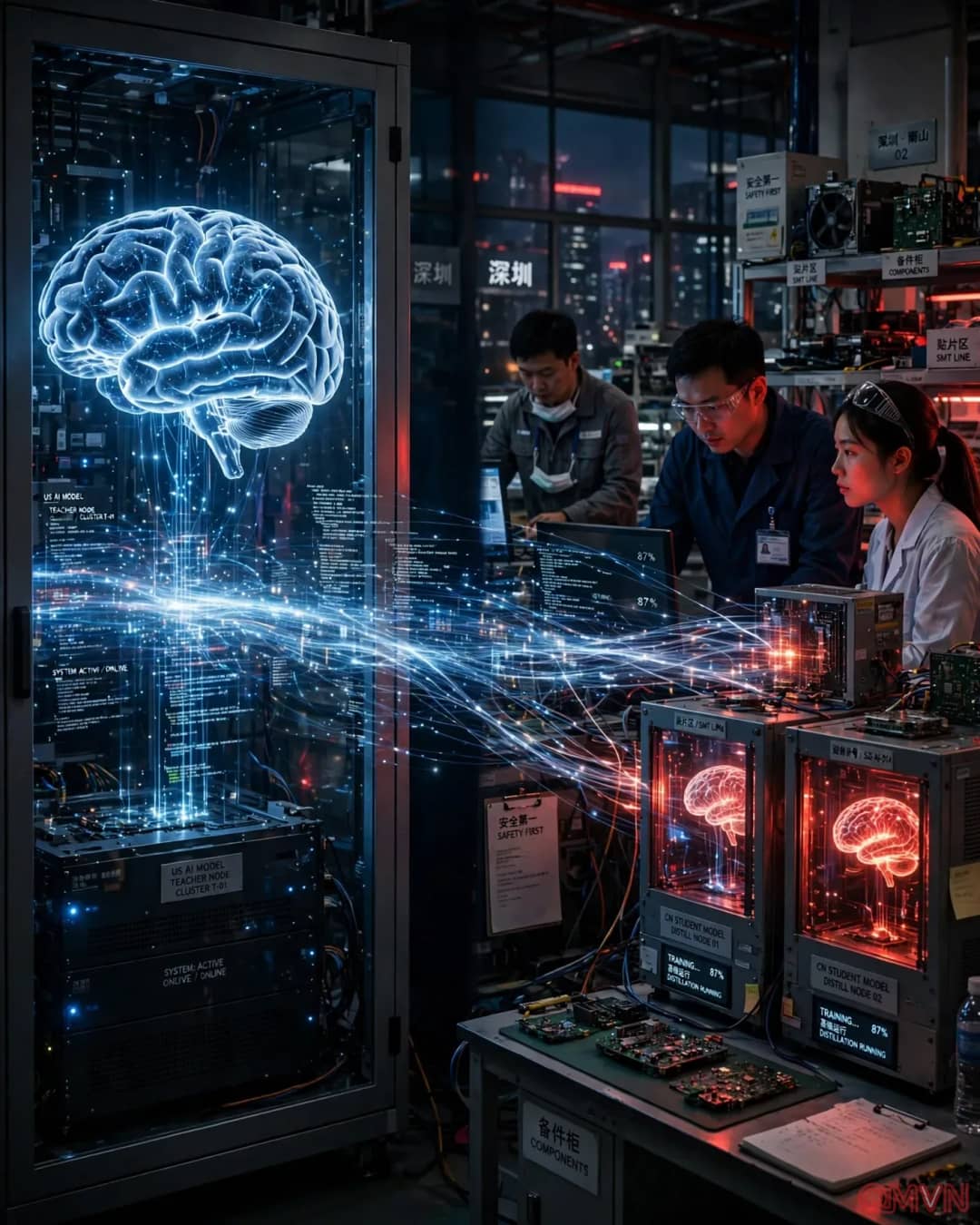
In a typical distillation process, a powerful “teacher” system demonstrates solutions, generates explanations or produces structured examples that can be used to train a smaller “student” model. Developers select, filter and evaluate those examples before incorporating them into further training. A compact model may then handle a narrow class of tasks at a fraction of the operating expense associated with the original system. That efficiency matters for manufacturers looking to embed AI into production lines, inspection equipment and enterprise software. Distillation, however, does not transfer every capability or guarantee comparable reliability.
The term should not be confused with a finding that technology has been stolen. Distillation is practiced internationally and can be used perfectly legitimately when companies compress models they own, license or have permission to access. Legal questions emerge when developers systematically harvest outputs from an external service to produce a competing product in breach of contractual terms, access restrictions or intellectual-property protections. Whether a particular case crosses such a line depends on its evidence and applicable law, not simply on the fact that one AI model learned from another.