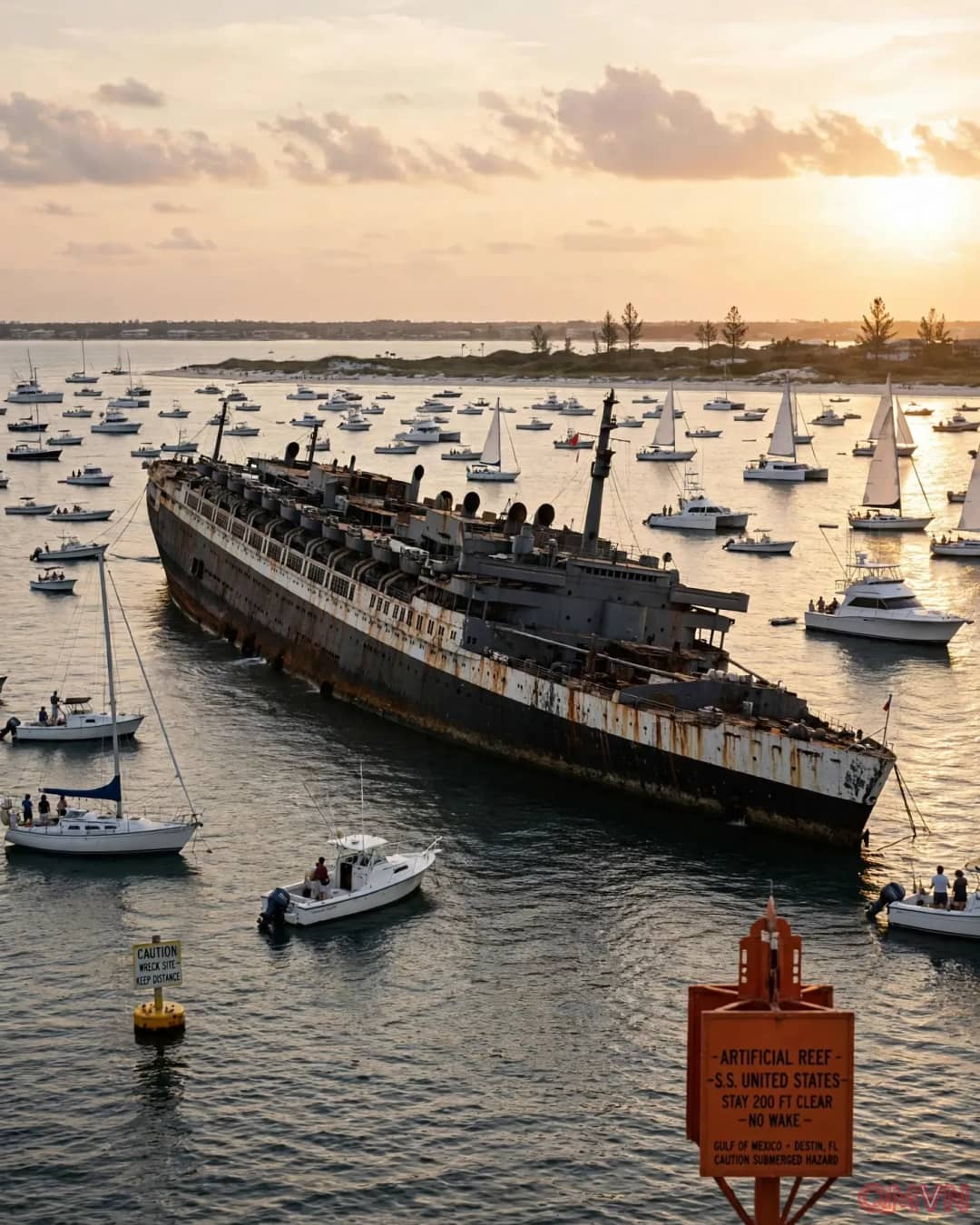
The final voyage
From the afternoon, crews began flooding the ship through openings cut just above the waterline, pumping water inside until the sea rushed in. Tim Mullane, whose company handled the sinking, was the last person aboard before stepping onto a waiting boat. Without its famous red, white and blue funnels, removed for a planned museum, the liner looked leaner than in its heyday, a fitting silhouette for the fastest ship ever to cross the Atlantic.
You can't set her on fire, you can't sink her, and you can't catch her.
The ship designer's boast held true for most of its life. Sinking it, it turned out, required years of planning and preparation, as well as legal battles: a preservationist group filed a last-minute lawsuit to block the effort, which a judge dismissed.
A postwar legend
Gibbs, a towering figure of 20th-century naval architecture, considered the S.S. United States his masterpiece.