The WHO’s risk assessment
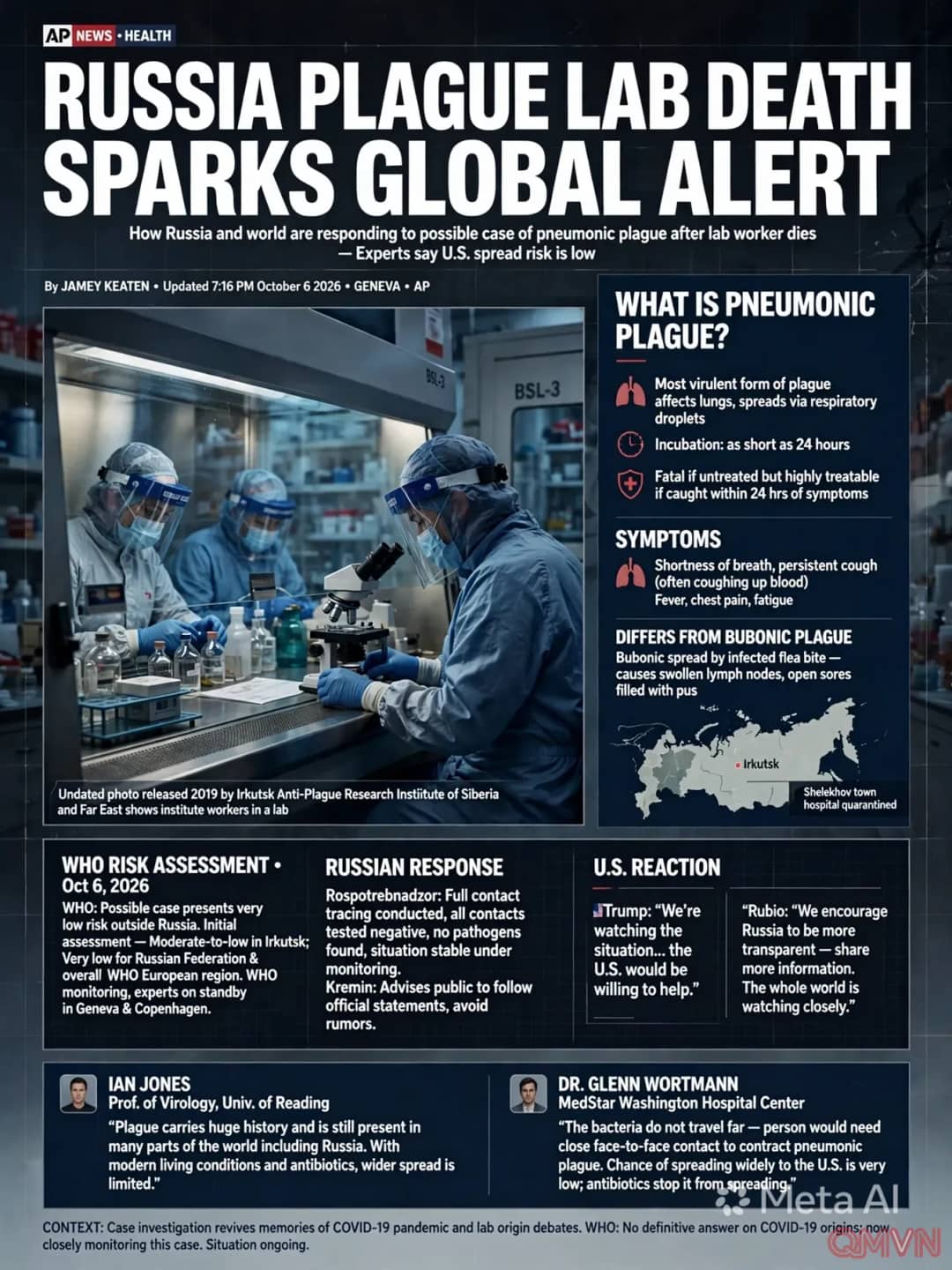
According to the Associated Press, WHO spokesperson Christian Lindmeier said the agency had been in contact with Russian authorities following reports of the institute employee’s death. The WHO’s initial assessment from available information estimates the risk as moderate to low for Irkutsk, low for the Russian Federation as a whole and very low for the WHO European region.
Lindmeier said the institute where the woman worked studies dangerous pathogens, including plague, in a part of Siberia where the disease occurs naturally in wild animals. The WHO has brought technical experts, including specialists in high-threat pathogens, to Geneva and Copenhagen, though Russia has not asked for them to deploy.
Russia says monitoring has concluded
Through an international health alert system, Russian health officials said a full range of preventive measures had been carried out, including contact tracing, medical monitoring and lab tests. Results showed no dangerous infectious pathogens in any contacts, and monitoring of 100% of contacts has concluded.
The epidemiological situation is stable and remains under monitoring.