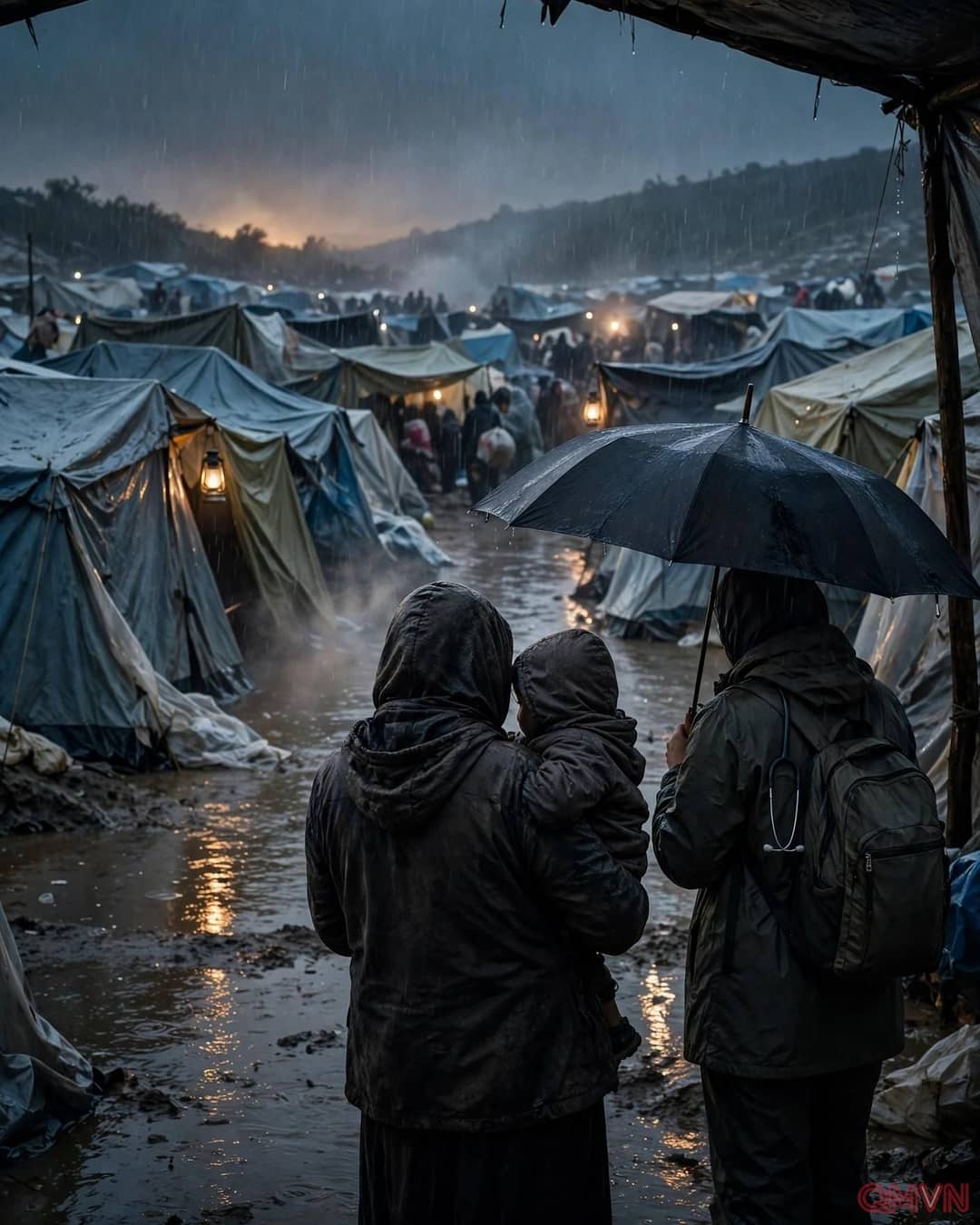
WHO warns respiratory illnesses are surging in Gaza as winter floods swamp tens of thousands of tents and the worst is still to come
The World Health Organization warned on Friday, November 13, of surging respiratory illnesses in the Gaza Strip, with worse expected after heavy rains flooded tens of thousands of tents housing displaced Palestinians. According to Dr Reinhilde Van De Weerdt, WHO representative in the Occupied Palestinian Territory, acute respiratory infections are 33,000 cases higher than at the same time last year and now account for 11% of all consultations. Poor living conditions and severe overcrowding are driving infections as Gaza’s population is squeezed into an ever-smaller area after the Israeli military advanced the “Yellow Line”, a demarcation set under the US-brokered ceasefire. The Israeli military rejects claims that it deliberately reduces the space available to civilians. Nearly a million displaced people live in flood-exposed areas, and the WHO is urgently calling for laboratory equipment to be allowed into Gaza to prevent outbreaks.
Tiếng Nói QUANG MINH·2 min read · 4 min listen·15 November 2026, 09:17 EST·
AI-generated illustration
Alarming numbers
Speaking to reporters in Geneva from Jerusalem, Dr Van De Weerdt stressed that the strain on the health system is already visible in the data:
The numbers already show the pressure. Acute respiratory infections are 33,000 cases higher than at the same time last year.
According to the WHO, respiratory infections now make up 11% of all consultations, and cold weather, flooding, overcrowded shelters and poor ventilation are expected to push that share higher.
Advertisement
300 × 250
She explained that people living in more crowded conditions makes it much easier for a virus to spread from person to person.
Floods and fragile tents
Just a few days of early-season rain have exposed how fragile life in the tent camps is. According to the WHO, nearly a million displaced people in Gaza live in flood-exposed areas, 400,000 of them in locations considered at extremely high risk.
It is shocking that just a few days of rain really showed us what the coming months will bring. And winter has not even fully set in. The worst really is yet to come.
The WHO said flooding heightens the risk of contaminated water, standing water gives mosquitoes and pests more places to breed, and dampness encourages mould and bacteria, which are major drivers of respiratory infections, especially in young children.
The “Yellow Line” and the dispute over living space
The WHO said overcrowding has worsened as the Israeli military expands its control by advancing the “Yellow Line”, a demarcation established under October’s ceasefire. The Israeli military told Reuters the Yellow Line aims to protect Israeli civilians and troops from threats, and that adjustments to its location follow the ceasefire agreement and international law and are not intended to harm the civilian population.
The IDF categorically rejects the claim that it operates to deliberately reduce the area available to the civilian population in the Gaza Strip.
COGAT, the Israeli military agency that coordinates aid, said more than 93,000 tents and over 8,600 trucks carrying tarpaulin sheets, blankets and winter clothing have entered Gaza since the Board of Peace, UN agencies and NGOs launched the winterisation plan. It added that equipment intended for Gaza’s reconstruction will be allowed in only after Hamas has been fully disarmed.
A race against outbreaks
While most medicines are getting into Gaza, the WHO says it faces difficulty bringing in laboratory supplies, which are vital for diagnosing patients before they can be treated. Dr Van De Weerdt appealed:
To prevent outbreaks, we really call to let laboratory equipment enter Gaza today, so that we can avoid a public health disaster on top of a disaster.
In response, COGAT said Israel has facilitated the entry of all medicines requested by international aid organisations and has not rejected any requests, adding that X-ray machines, oxygen generators, batteries, generators and other equipment have entered Gaza. Last week, the agency also said it had stepped up efforts to improve sanitary conditions before the heavy rain, in coordination with international organisations.
EVENT BACKGROUND
The road to this harsh winter began with the ceasefire that took effect on October 10, 2025, under President Donald Trump’s 20-point peace plan. The Yellow Line initially left about 53% of Gaza’s territory under Israeli military control. Since then the line has shifted several times; according to Al Jazeera, Israel now restricts access to about 65% of the territory, while some 2.1 million people are crowded into the rest.
Heavy rain that began on the evening of November 6 caused widespread flooding and the collapse of damaged buildings, according to OCHA. The International Rescue Committee said the tents and shelters of about 26,000 households were flooded, and many families face a fourth winter in tents that are typically designed to last around six months. The shelter cluster estimates that about 121,000 tents and 561,000 tarpaulins are still needed.
Humanitarian organisations are urging Israel to approve more supplies, from shelter items to spare parts and heavy machinery; Israel says it has facilitated aid and ties reconstruction to Hamas’s disarmament. The crux is that the gap between need and supply is being measured in the health of the most vulnerable.
Key takeaways
A roof does more than keep out the rain; it is the first shield of good health.
Preventing illness today is always cheaper than fighting an epidemic tomorrow.
When living space shrinks, the protection of human dignity must expand.
Subscribe to the QMVN newsletter
A daily morning digest - only stories worth reading, no spam.