MAIN ARTICLE
October becomes the deadliest month
The late-season acceleration shows why officials cannot rely on the traditional monsoon calendar alone. According to Bangladesh’s Directorate General of Health Services (DGHS), 1,262 new hospital admissions were recorded over the 24 hours reported on October 30. This brought 2026 admissions to 133,367, with 126,713 people discharged. Hospital admission counts are not a measure of every infection, as less severe cases may never reach a ward. Of the year’s 418 reported dengue deaths, 173 were recorded during the first 30 days of October, accounting for more than two-fifths of the annual toll. The surge follows 148 deaths in September and emphasizes the pressure on emergency departments.
What late treatment can mean
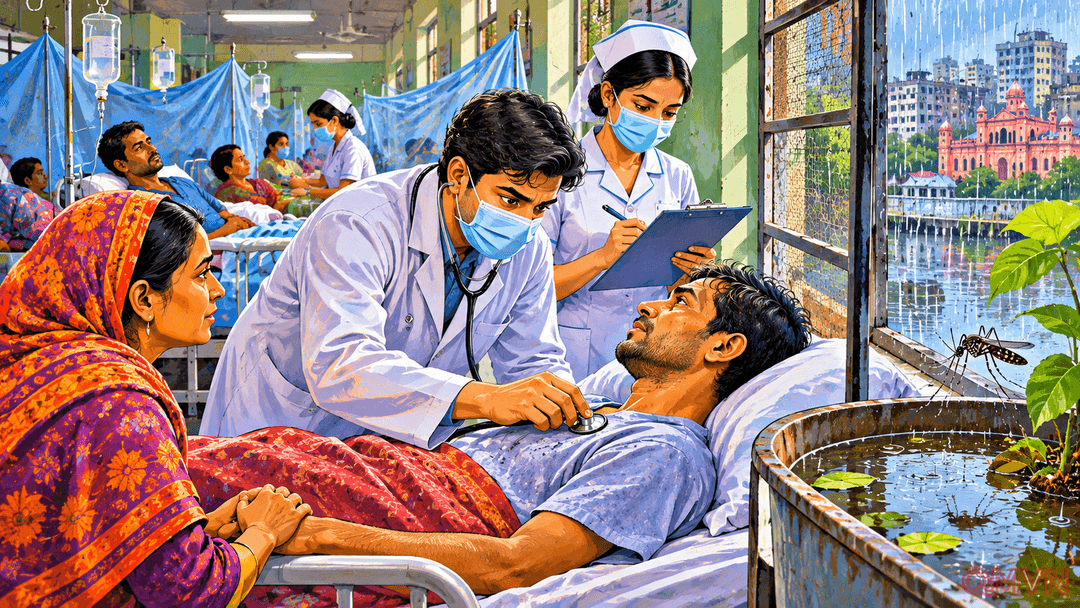
At Dhaka’s Shaheed Suhrawardy Medical College and Hospital, director Mirza Golam Sarwar reported 279 dengue patients under care after 67 new admissions in a day. Some patients were presenting in shock, with very low blood pressure and falling oxygen saturation. Physician ABM Abdullah identified delayed diagnosis, delayed treatment and repeat infection as concerns. Infection with one dengue serotype does not reliably protect against the others. Severe abdominal pain, persistent vomiting, mucosal bleeding, unusual drowsiness or profound weakness require urgent medical assessment. Aspirin and ibuprofen can increase bleeding risk in dengue; patients should seek professional advice on symptom management and hydration.