The Rise of Seasonal Analysis and Its Inherent Creative Boundaries
The consumer fascination with personal color testing, utilizing fabric draping across the torso to assign individuals into seasonal categories of spring, summer, autumn, or winter, gained massive commercial traction across Asian metropolitan centers. Designed to simplify purchasing decisions amidst retail saturation, the system provided binary boundaries for consumers seeking immediate aesthetic clarity. Nevertheless, dogmatic adherence to these formulas frequently resulted in sterile wardrobes stripped of expressive joy.
Shoppers frequently developed anxieties around acquiring apparel outside their designated seasonal charts, resulting in decision fatigue and perceived wardrobe inadequacy. Leading image consultants emphasize that confining adults to limited palettes is inherently restrictive, as commercial designers craft collections to tell compelling cultural narratives rather than accommodate prescriptive seasonal frameworks.
Liberating Wardrobes Through the Proportional Color Pyramid
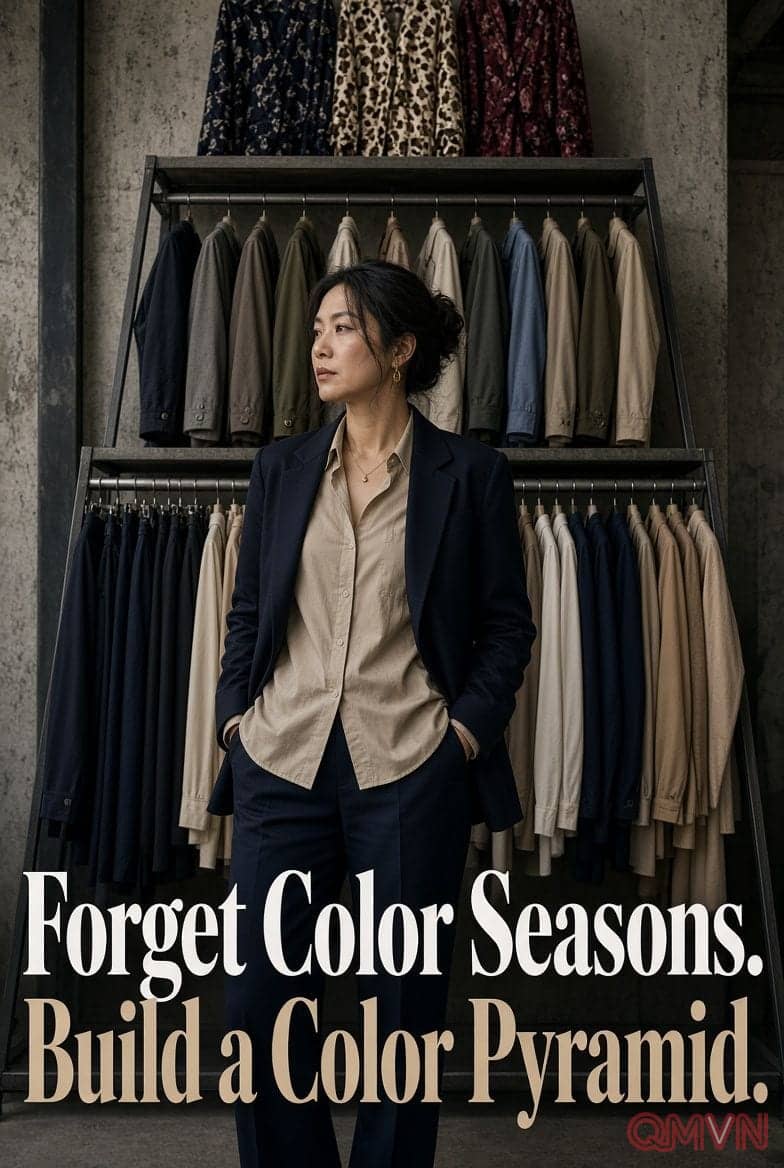
To transcend algorithmic conformity, stylist Samuel Gilzean developed the color pyramid, a versatile three-tier framework adaptable to any demographic or lifestyle. The foundational tier encompasses forty to fifty percent of an individual's wardrobe, consisting of grounded anchor neutrals including navy, black, olive, khaki, rich browns, off-white, and crisp white that deliver seamless functional pairing.